What Is a Real Ruby Necklace Worth? Price Factors
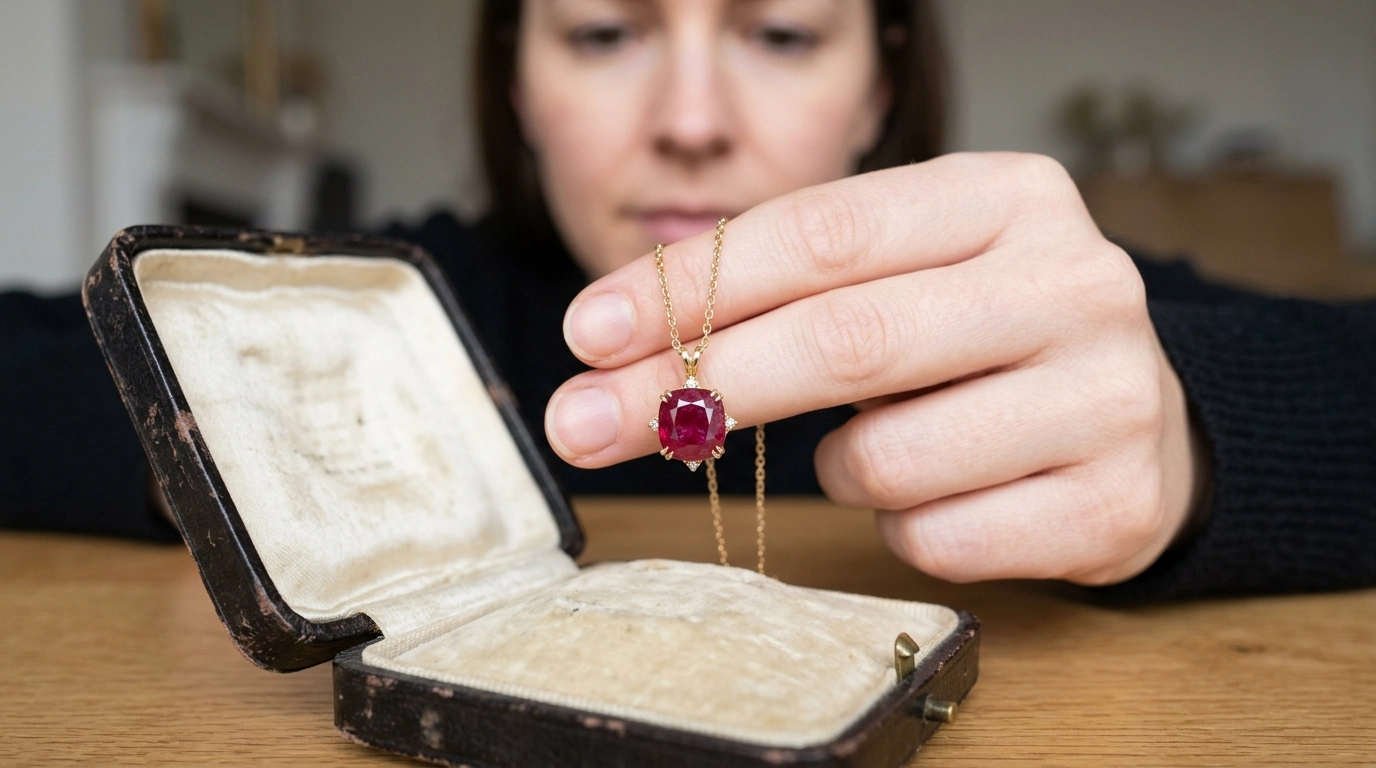
How much is a real ruby necklace worth?
A real ruby necklace can be worth anywhere from under $200 to many thousands of dollars. The price depends on whether the ruby is natural or lab-created, its quality and size, any treatments, the metal and craftsmanship, and the seller. A small, heavily included ruby in a simple silver setting may cost a few hundred dollars or less, while a fine natural ruby in gold or platinum can be worth several thousand dollars or more.
“Real” does not automatically mean rare or expensive. Lab-created rubies are genuine rubies with the same basic chemical composition as natural ones, but they are typically less costly because they are made in a controlled setting. Natural rubies can also be treated to improve their appearance; heat treatment is common, while some other treatments can significantly affect value.
What affects a ruby necklace’s price?
Gem professionals consider color, clarity, cut, and carat weight. Vivid, even red color is often desirable, but the stone’s overall appearance matters more than any single feature. Visible inclusions, chips, or a poor cut can reduce value. A larger ruby may cost more, though size alone does not make a stone valuable.
Origin and treatment may matter, too. Some origins are associated with especially sought-after stones, but origin claims should be supported by reliable documentation. The necklace’s setting also contributes to its retail price: precious-metal weight, brand, design, and workmanship can add value independent of the ruby.
How can you estimate or verify its value?
Start with the original receipt, grading report, or other documentation, and check whether it identifies the ruby as natural or lab-created and lists any treatments. A jeweler can inspect the piece, but a written appraisal from a qualified gemologist is more useful for insurance or resale decisions. An insurance replacement estimate is not necessarily the amount a buyer would pay; resale offers are often lower than retail prices.
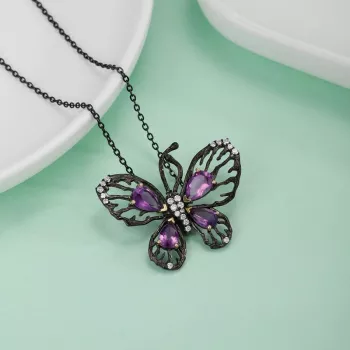
If you are comparing styles, see the guide to a sterling silver butterfly pendant with lab-created ruby and cubic zirconia. Check the product details carefully: a necklace described as containing both stones may use cubic zirconia for some accents, so the listing can clarify which stones are ruby.
FAQ
Are lab-created rubies real rubies?
Yes. Lab-created rubies are rubies produced in a laboratory and share the same basic chemical composition as natural rubies. They are different from imitations such as red glass, though they generally cost less than comparable natural stones.









Leave a comment