Stainless Manual Dicer for 1/4 & 3/8 Inch Uniform Cubes
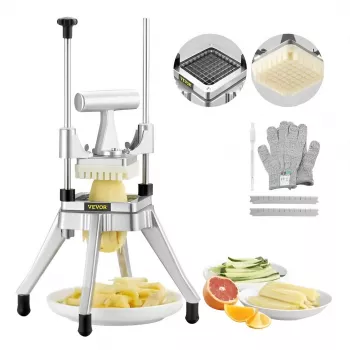
Uniform cuts save time, improve presentation, and support portion control in busy kitchens. A stainless steel manual dicer is a practical choice for restaurants, food trucks, catering, and high-volume home meal prep that need reliable cubes without relying on electricity.
What This Dicer Is Built to Do
- Create consistent diced vegetables and fruits for salads, salsas, soups, stir-fries, and garnishes
- Speed up repetitive prep tasks while keeping hands farther from the cutting surface
- Support batch prep for service lines, catering trays, and meal-prep containers
- Offer a manual alternative when outlets are limited or electric equipment is restricted
Key Features and What They Mean in Daily Use
- Stainless steel construction: Built for frequent use and easier sanitation in busy environments where equipment gets washed often.
- Two common dicing sizes (3/8″ and 1/4″): Lets one tool cover multiple menus, from soup bases to fine toppings.
- Manual leverage: Helps reduce fatigue compared with hand dicing (best results come from steady, even pressure rather than rapid pumping).
- Repeatable results: Uniform cubes promote even cooking times, consistent texture, and cleaner plating across shifts.
3/8″ vs 1/4″ Dice: Picking the Right Cut Size for the Job
Choosing the right grid is often the difference between “good enough” prep and a prep flow that stays consistent all day. A 3/8″ cut keeps more bite for hearty applications, while 1/4″ is better for finer textures and faster cooking. When the cut size matches the dish, there’s less hand trimming and fewer “odd pieces” that throw off portioning.
Common Uses by Dice Size
| Dice size | Best for | Examples |
|---|---|---|
| 1/4″ | Fine, quick-cooking prep | Pico-style toppings, relish, small salad mix-ins |
| 3/8″ | Hearty texture and bite | Soup base, stew veg, chunky salsa, roasted vegetable medley |
Best Foods to Dice (and What to Avoid)
- Best results: Firm produce such as onions, potatoes, carrots, cucumbers, bell peppers, apples, and pears.
- Prep matters: Peel when needed, remove tough ends, and square off rounded sides so the ingredient seats evenly and doesn’t wedge.
- Avoid very soft items: Overripe tomatoes or soft peaches can crush rather than cut cleanly, leading to mash and juice buildup in the grid.
- Handle fibrous produce thoughtfully: For items with stringy structure, cut into manageable lengths and press steadily to prevent tearing.
How to Use for Cleaner Cuts and Faster Output
- Firm it up: Briefly chilling softer produce can help it cut cleaner and reduce smearing.
- Size to the cutting area: Pre-cut ingredients so they sit flat and fit the grid; avoid forcing oversized chunks that can bend or jam.
- Press with intent: Use smooth, decisive presses rather than repeated small pushes to minimize bruising and keep cubes uniform.
- Set a repeatable workflow: wash/peel → pre-cut to size → dice → store in labeled containers, so you’re not stopping midstream to reset.
Cleaning and Food-Safety Practices
Fast cleanup is part of keeping output fast. Starches and sugars dry into a stubborn film, so rinsing right away saves time and protects the cutting grid.
- Disassemble as designed and rinse immediately after use to prevent residue from hardening on the blades.
- Use a brush to clear the grid safely; avoid wiping directly across sharp edges.
- Wash, rinse, and sanitize following local food-safety requirements; dry thoroughly to reduce spotting and corrosion risk.
- Inspect blades/grids regularly; replace or service components if you see bending, nicks, or dulling that affects cut quality.
For general sanitation guidance, consult the U.S. FDA Food Code and the USDA’s “Clean” basics in the FSIS Kitchen Companion.
Where a Manual Dicer Fits in a Commercial Kitchen
- Dedicated prep lanes: Great for onions, peppers, and potatoes where consistency and speed directly impact ticket times.
- Catering and banquets: Uniform cubes improve tray presentation and help keep portioning consistent across dozens (or hundreds) of servings.
- Food trucks and pop-ups: Manual operation is helpful when power is limited and compact gear is preferred.
- Backup tool: Useful when electric processors are tied up, down for cleaning, or restricted in certain prep areas.
Specifications to Confirm Before Buying
- Included dice sizes: Confirm the grids (3/8″ and 1/4″) align with your menu needs.
- Materials: Look for stainless steel contact surfaces suited to frequent washing and sanitizing.
- Stability: A stable base/feet reduce sliding during pressing, which improves safety and consistency.
- Cleaning and serviceability: Easy disassembly matters; replacement parts/grids availability helps extend tool life.
For additional context on equipment expectations and cleanability, see NSF’s overview of food equipment standards.
Product Option Available Now
- Commercial Manual Vegetable Fruit Dicer Cutter 3/8″ & 1/4″ Stainless Steel: a stainless steel manual dicer with two popular cut sizes for daily prep.
- Commercial Meat Tenderizer: a helpful companion tool for prep stations that handle high-volume proteins alongside produce.
FAQ
What is the difference between 1/4″ and 3/8″ dicing?
A 1/4″ dice is smaller and cooks faster, making it a better fit for fine toppings, relishes, and quick sautés. A 3/8″ dice keeps a chunkier bite that works well in soups, stews, roasted vegetables, and heartier salsas. Both sizes help maintain consistent portions and presentation.
Can a manual dicer handle potatoes and onions?
Yes—firm produce like potatoes and onions are among the best candidates for a manual dicer. Peel and trim as needed, cut pieces to fit the grid, and apply steady, even pressure for clean cubes. Rinse promptly after potatoes to prevent starch from drying onto the blades.
How should the dicer be cleaned safely?
Disassemble it as designed, rinse immediately, and use a brush to clear the grid without putting fingers near the cutting edges. Then wash, rinse, sanitize, and dry thoroughly before reassembly and storage. Avoid wiping directly across blades with a cloth or sponge.









Leave a comment