Pop-Up Golf Chipping Net: Backyard Short-Game Practice
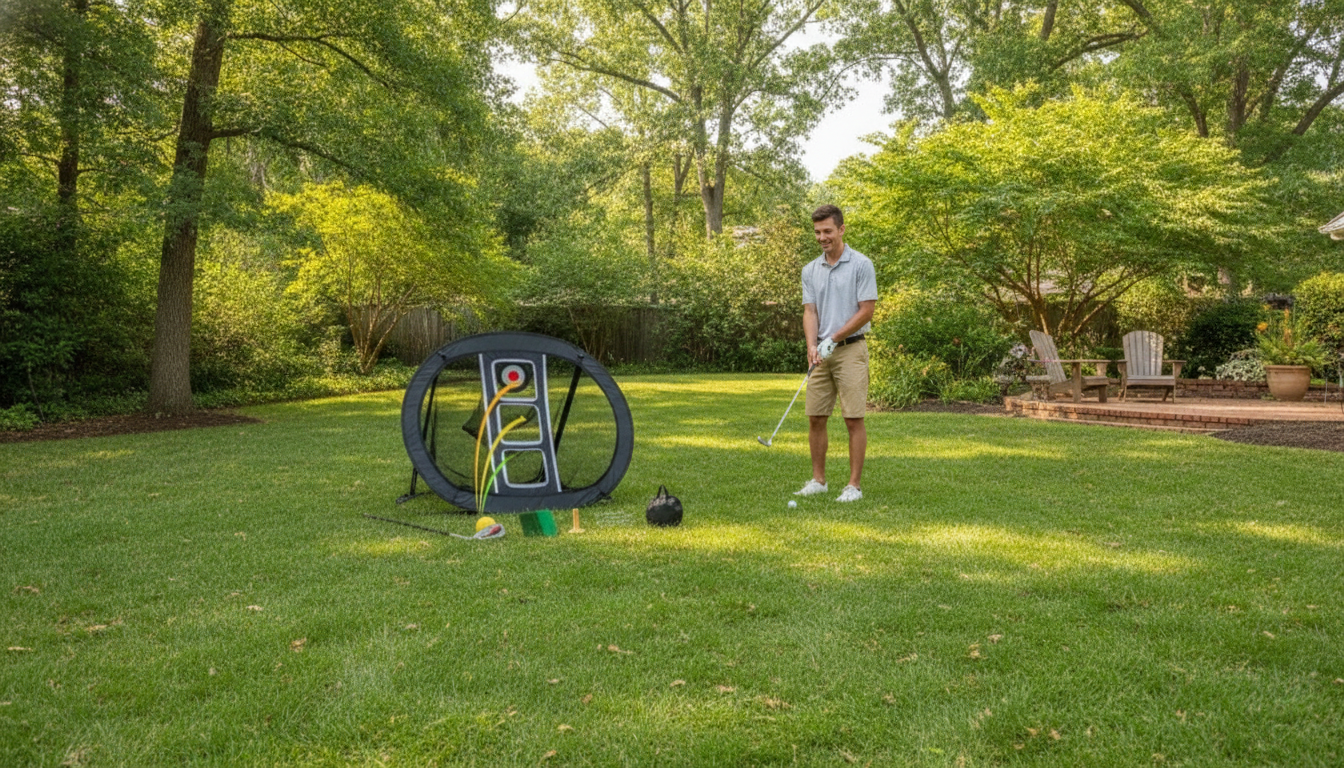
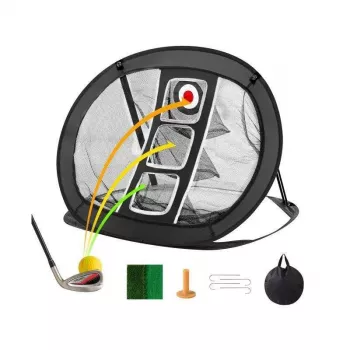
Portable Pop-Up Golf Chipping Net for Backyard Swing Practice
A pop-up chipping net turns a small outdoor space into a reliable short-game practice spot. With quick setup, clear targets, and easy storage, it helps build distance control and face awareness without a trip to the range. Whether you’re squeezing in 10 minutes after work or running a focused wedge session on the weekend, a portable net makes it easier to collect quality reps—and keep them consistent.
What a Pop-Up Chipping Net Helps Improve
Short-game progress usually comes from repeatable feedback. A pop-up chipping net gives you a defined “finish line” for each shot so you can measure results, not just feelings.
- Distance control on chips and pitch shots by giving repeatable target zones.
- Start line and face control through visual feedback when shots miss left/right.
- Consistency under pressure by running simple “make X of Y” practice games.
- At-home reps for tempo and contact without needing a full driving range.
Key Features to Look For in a Backyard Chipping Net
Not all pop-up nets feel the same once balls start flying. A few design details can make practice smoother, safer, and more realistic.
- Pop-up frame that opens and folds quickly for short practice sessions.
- Multiple target pockets or rings to practice different trajectories and landing spots.
- Net depth and side panels designed to reduce bounce-outs and keep balls contained.
- Ground stability options (stakes/anchors) for breezy conditions.
- Carry bag or compact fold for storage in a garage, trunk, or closet.
Backyard Practice Checklist
| Item | Why it matters | Quick tip |
|---|---|---|
| Flat hitting area | Keeps contact consistent and protects wrists | Use a small hitting mat or short-cut grass |
| Safe backstop | Adds peace of mind if a ball skips or misses the net | Set up in front of a fence, hedge, or spare net |
| Anchoring | Prevents tipping in wind or on uneven lawns | Stake corners or weigh the base with sandbags |
| Ball type | Controls flight and reduces damage risk | Start with foam balls indoors or near windows |
| Landing zone | Helps simulate real chipping outcomes | Place a towel or hoop 3–10 yards in front of the net |
Setup Tips for Faster, Safer Practice
A few minutes of smart setup can prevent bounce-backs and make your target feedback more reliable.
- Place the net on a level surface and confirm it fully locks into its open shape.
- Allow enough swing clearance for wedges and short irons; avoid low tree branches.
- Start close (6–10 feet) to dial in contact, then increase distance as control improves.
- Angle the net slightly so shots feed into pockets and reduce hard rebounds.
- Use stakes or weights when practicing outdoors to keep the frame stable.
Simple Backyard Practice Routines (10–20 Minutes)
Short sessions work best when they have structure. Rotate between a “block” drill (same shot repeated) and a “random” drill (new shot each ball) to build both technique and decision-making.
- Ladder drill: Hit 5 balls to each target zone from the same spot, then change distance.
- Up-and-down game: Choose a target pocket as the “hole” and keep score over 9–18 attempts.
- Trajectory reps: Alternate low chip (ball back, hands forward) and higher pitch (ball forward, more hinge).
- Random practice: Change club and landing spot each ball to mimic on-course decision-making.
- Pressure finish: End only after making 3 hits in the smallest target (or 3 in a row in the center).
For technique refreshers and practice ideas, the PGA’s instruction resources can help you add variety without turning practice into guesswork.
Choosing Balls, Clubs, and Distances for Realistic Feedback
The “right” ball and distance depend on your space and what feedback you want most.
- Foam balls are best for tight spaces and indoor garages; real balls provide the truest flight outdoors.
- Wedges (PW, GW, SW, LW) cover most short-game needs; short irons can be added for bump-and-run reps.
- Begin at very short range to focus on clean contact, then extend to 10–20 yards for distance control.
- For swing practice, keep shots controlled and prioritize direction and strike over speed.
If you ever want to double-check equipment and practice context within the game’s framework, the USGA Rules of Golf hub is a dependable reference.
Portability and Storage: Keeping Practice Convenient
A big reason pop-up nets get used more often is that they remove friction. When setup and teardown are fast, it’s easier to practice more frequently.
Care and Longevity
Featured Picks for Easy, At-Home Practice (and Gifting)
-
Portable Golf Chipping Net for Backyard Swing Practice – Pop Up Golf Hitting Aid
— $25.97 -
Personalized Balloon Letter Necklace
— $5.51
Portable Golf Chipping Net for Backyard Swing Practice – Pop Up Golf Hitting Aid
FAQ
How far should the net be placed for chipping practice?
Start close (6–10 feet) to dial in clean contact and start line, then move back to roughly 10–20 yards to challenge distance control. Increase gradually as your accuracy improves and bounce-outs become rare.
Can real golf balls be used in a backyard?
Yes, as long as the area is safe and you have a backstop for peace of mind. If you’re near windows, neighbors, or tight spaces, foam balls are the safer option while you work on strike and face control.
Will a pop-up net work for swing practice as well as chipping?
It can work well for controlled wedge swings and many short-iron shots, especially when the net is stable and has enough depth. Full-power shots depend on the net’s build and anchoring, so keep speed reasonable unless it’s designed for higher-impact hitting.







Leave a comment