Kids Wooden Tool Bench Set: Build, Fix & Learn
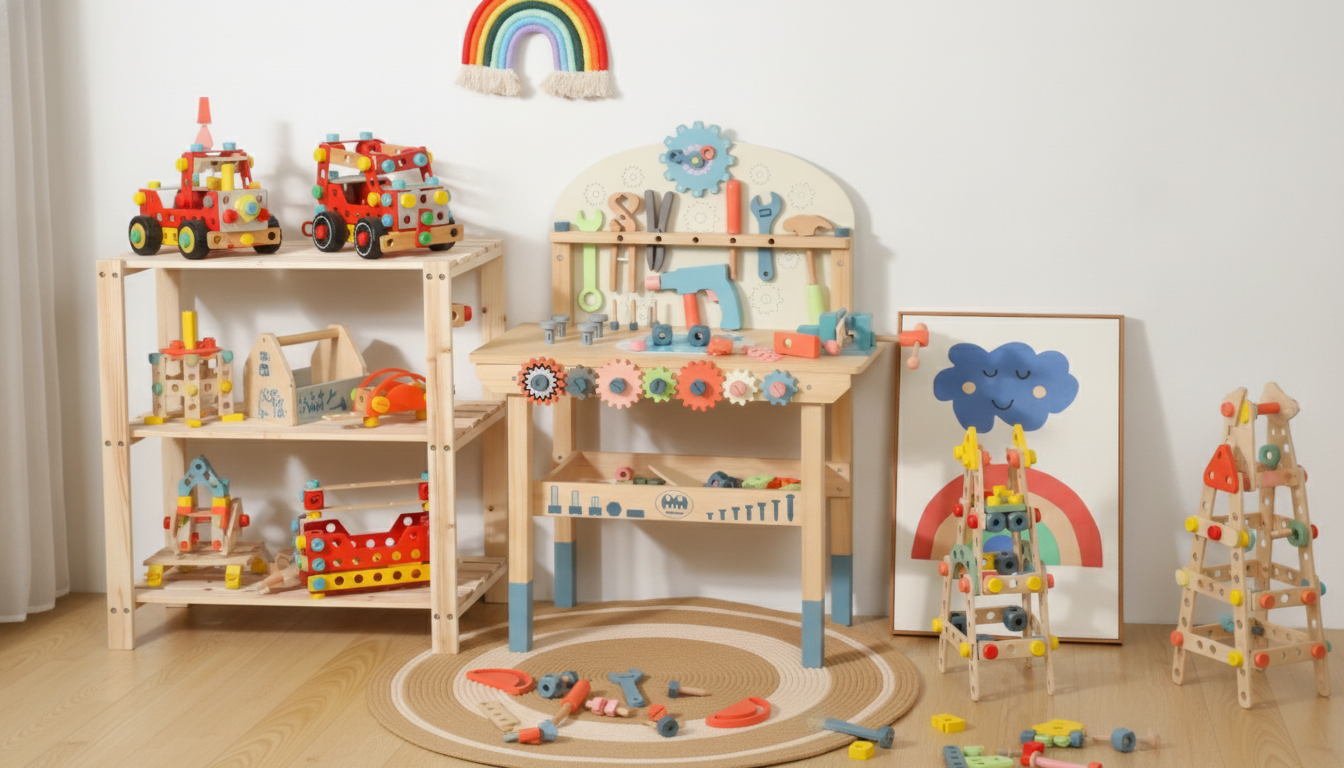
Kids Wooden Tool Bench Set: Hands-On Building Play for Curious Makers
A wooden tool bench turns everyday curiosity into practical play—measuring, tightening, sorting, and building. It creates a small “workshop” where kids can tinker like grown-ups while practicing real skills: hand control, focus, and early engineering thinking. Below is a practical guide to choosing a bench that fits your child’s age and space, the features that keep play going longer, and simple ways to keep everything safe and organized.
Why a Wooden Tool Bench Becomes a Favorite Toy
Kids gravitate to tool benches because the play feels important and real. Whether they’re “repairing” a toy car or assembling a pretend project, the actions match what they see adults do—fixing, assembling, and maintaining.
- Pretend play with real-world purpose: Turning screws, tapping pegs, and clamping pieces helps kids act out helpful roles and build confidence.
- Fine-motor development: Twisting, fitting, aligning, and pressing pieces together strengthens hand muscles and coordination.
- Early problem-solving: Kids plan a build, test it, then adjust when parts don’t line up—an introduction to persistence and flexible thinking.
- Cleanup becomes part of the routine: Pegboards, hooks, and shelves give every tool a “home,” making it easier for kids to reset the space.
What to Look For in a Kids Wooden Tool Bench Set
A great wooden tool bench set balances sturdiness, safety, and variety. The goal is a bench that holds up to energetic play while staying easy for small hands to use successfully.
- Sturdy construction: Look for thick wood pieces, stable legs, smooth edges, and a base that doesn’t wobble during play.
- Safe finishes: Choose non-toxic paints or stains with well-sealed surfaces to reduce splinter risk and make wiping easier.
- Tool variety: A hammer, wrench, screwdriver, nuts/bolts, gears, and a vise-style feature add depth and keep kids experimenting.
- Storage and layout: Pegboards, shelves, and trays help children practice sorting and returning items to the same spot.
- Build options: Boards with holes, connectors, and interchangeable parts support multiple projects from the same set.
- Noise and impact: Wooden pieces are often quieter than plastic; still, avoid parts that feel overly heavy for little hands.
| Feature | Why it matters | What to check |
|---|---|---|
| Bench stability | Prevents tipping during enthusiastic play | Wide base, solid legs, minimal wobble |
| Smooth edges | Reduces scrapes and snagged clothing | Rounded corners, sanded surfaces, no sharp hardware |
| Tool fit | Improves success and reduces frustration | Screws/bolts thread smoothly; parts align easily |
| Storage | Makes cleanup part of the play loop | Hooks/pegboard, bins, labeled spots |
| Age-appropriate parts | Avoids choking hazards and improves grip control | Larger pieces for younger kids; smaller fasteners for older kids |
| Room footprint | Helps it get used daily, not stored away | Measure play area; confirm bench height |
Age and Skill Fit: From Toddler Tinkering to Early Builder Projects
Matching the set to your child’s developmental stage is the fastest way to get long, repeat play sessions rather than a toy that’s “too hard” or “too babyish.”
- Ages 2–3: Prioritize larger parts, simple fit-and-place play, and sturdy tools without tiny fasteners.
- Ages 4–5: Look for bolts/nuts, a working vise, and more build combinations that extend attention span.
- Ages 6+: Consider sets with more complex assemblies, patterned builds (vehicles, structures), and extra accessories.
- Signs it’s a good fit: Your child can grasp tools comfortably, complete a basic build with minimal help, and stay engaged beyond a few minutes.
Play Ideas That Keep It Fresh
A tool bench stays exciting when the “job” changes. Rotating simple challenges can make the same parts feel brand-new.
Safety and Setup Tips for Confident Play
For additional toy-safety basics, review guidance from the U.S. Consumer Product Safety Commission (CPSC) and the American Academy of Pediatrics.
Featured Option: Kids Wooden Tool Bench Set
If you’re looking for a classic bench-style set that supports hands-on building, tool practice, and organized storage, the Kids Wooden Tool Bench Set works well as a dedicated activity station in a playroom, bedroom corner, or classroom dramatic-play area. It’s also a strong gift pick for kids who love building blocks, puzzles, and pretend repair play—especially when you want an activity that encourages focus and follow-through.
To see current price and availability, along with photos and full details, visit the product page: Kids Wooden Tool Bench Set.
More In-Stock Picks (Great for Gifting)
- Personalized Balloon Letter Necklace for a small, personal add-on gift.
- 5-Drawer Wood Nightstand with Rotating Wheels for Easy Mobility and Storage to help keep play spaces organized.
- 5-Step Folding Dog Stairs for Cars for pet households that travel.
Care, Maintenance, and Keeping Pieces Together
FAQ
What age is a wooden tool bench set best for?
Many wooden tool bench sets work well from about ages 2–6+, depending on part size and build complexity. Larger pieces suit younger kids, while older kids enjoy smaller fasteners and more detailed builds—always follow the age label, especially when small parts are included.
Are wooden tool bench sets safe for kids?
They can be very safe when they’re well-made, with smooth edges and non-toxic finishes, and when small parts are used with age-appropriate supervision. Place the bench on a stable surface and do quick routine checks for loose or damaged pieces.
How do you keep tool bench pieces from getting lost?
Use a simple sorting system: labeled bins for tools, a divided container for bolts and nuts, and a consistent end-of-play cleanup routine. If toddlers are around, store small components out of reach between play sessions.








Leave a comment