Hanging Hammock Swing Chair Guide: Buy, Hang, Care

Hanging Hammock Swing Chair: A Cozy Seat for Indoors and Out
A hanging hammock swing chair turns a corner, porch, or patio into a relaxing spot for reading, lounging, or gentle swinging. The right setup comes down to space, mounting method, comfort, and safe weight support. This guide breaks down what to look for, how to hang it securely, and how to care for it so it stays comfortable and dependable.
What a Hanging Swing Chair Adds to a Space
A swing chair is one of the simplest ways to make a home feel more “lived-in” and welcoming. Unlike a bulky lounge chair, it creates a dedicated relaxation zone while keeping floor space open, which is especially helpful in apartments, small bedrooms, and narrow balconies.
Because it’s both seating and décor, a hanging chair can act like a statement piece in reading nooks, kids’ corners (with supervision), covered patios, and cozy bedroom setups. The gentle motion can also feel calming—good for unwinding at the end of the day, stretching, or settling in with a book.
Style-wise, there’s a lot of flexibility: soft fabrics can feel modern and minimal, macramé and rope designs lean boho, and neutral tones work well in coastal or rustic spaces depending on the hardware and cushion choices.
Key Things to Check Before Buying
1) Weight capacity (chair and hardware)
Confirm the swing chair’s weight rating and make sure every connector in the system meets or exceeds that load: mount/anchor, carabiner, swivel, chain/rope, and any straps. Overhead use is different from wall mounting—only use hardware designed and rated for overhead loads.
2) Mounting location and method
Your mounting plan affects everything from what tools you need to long-term stability. Common options include an indoor ceiling joist, an exposed porch beam, or a freestanding stand (popular for renters or no-drill setups).
3) Seat size, depth, and back support
Look for enough room to sit comfortably—some people like to sit cross-legged—plus back height that supports your shoulders if you plan on reading for long stretches. Deeper “cocoon” styles feel enveloping, while more upright designs can be easier to get in and out of.
4) Materials and comfort features
Cotton blends tend to feel softer and cozier indoors. Polyester or mixed synthetics can be easier to clean and may handle humidity better. Rope and macramé styles are breathable and visually light. Cushions make a big difference for comfort, and a spreader bar (when included) can change how open the seat feels and how stable it is when you shift weight.
5) Weather exposure
Sun, rain, and humidity impact fabric, stitching, and metal connectors. A covered placement (like a roofed porch) usually extends the life of both the chair and hardware. For outdoor installations, choose corrosion-resistant components.
Sizing and Clearance: Getting the Hang Height Right
Before installation, measure your space so the chair sits at a comfortable height and has room to sway without bumping walls, railings, or furniture. Also consider entry and exit: the seat should be easy to step into without feeling too low (hard to stand up) or too high (awkward to climb into).
| Item to measure | What to look for | Why it matters |
|---|---|---|
| Ceiling/beam height | Enough height to hang and still sit comfortably | Prevents knees from being too high and keeps the chair usable |
| Side clearance | Open space on both sides | Avoids scraping walls and keeps the swing motion smooth |
| Front/back clearance | Room to gently sway forward and back | Reduces collisions with furniture and improves comfort |
| Mount point strength | Solid joist/beam or rated stand | Supports safe loading over time |
Mounting Options and Safe Setup
Ceiling joist installation (indoors)
Exposed beam or porch beam (outdoors)
Swing stand (no-drill flexibility)
Hardware essentials
Every connector should have a working load rating suitable for overhead use. Outdoors, choose corrosion-resistant materials when possible. Swivels help reduce rope twisting, and springs can soften the bounce—just make sure they’re rated and that you have enough vertical clearance. For general safety guidance, review the CPSC hammock safety recommendations. For understanding structural framing concepts like joists, the American Wood Council resources are a helpful reference point.
Final safety check
Comfort Details That Make a Big Difference
Care and Maintenance for Longer Life
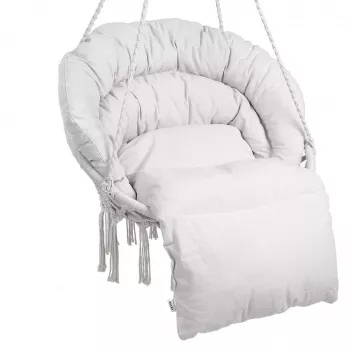
Featured Option: Hanging Hammock Swing Chair
If you’re ready to add a dedicated lounging spot, the Hanging Hammock Swing Chair is an easy way to create a cozy corner indoors or a relaxing seat on a covered porch. Pair it with a cushion set, a throw blanket, and a small side table for books or drinks.
More In-Stock Picks for Thoughtful Add-Ons
Outfitting a relaxation space (or shopping for gifts) often comes down to the details. If you’re building a family-friendly home setup, the Kids Wooden Tool Bench Set can be a fun activity station that complements a calm reading or lounging area nearby, helping different ages enjoy the same room in their own way.
FAQ
Can a hanging swing chair be installed in a ceiling?
Yes, when mounted into a solid joist/beam using hardware rated for overhead loads. Avoid drywall-only anchors, verify weight ratings for the chair and every connector, and test gradually after installation.
How much space is needed around a hanging swing chair?
Plan for comfortable entry/exit plus room to sway without hitting walls or furniture. Leave open clearance on the sides and front/back, and set the seat height so it’s easy to sit down and stand up.
Is it safe to leave a hammock swing chair outside?
It depends on the materials and exposure. Covered placement helps, and corrosion-resistant hardware plus regular inspections reduce risk from sun, moisture, and temperature changes.











Leave a comment