5-Gallon Walk-Behind Manual Sweeper for Yard Paths
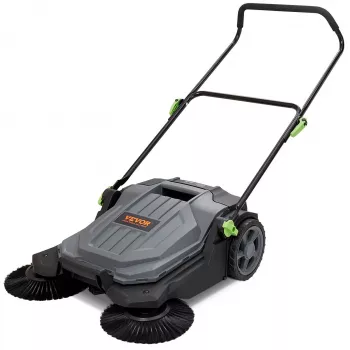
Walk-Behind Manual Floor Sweeper with 5-Gallon Waste Container for Yard & Walkway
A walk-behind manual sweeper is a practical way to collect dry debris from walkways, patios, driveways, and shop floors—without cords, fuel, or loud motors. With a 5-gallon waste container, longer cleanups can be finished with fewer stops to empty, which is especially helpful during leaf drop, after storms, or around entryways that collect grit and sand.
What it is and what it’s made to handle
This style of sweeper is push-powered: as the wheels roll, rotating brushes sweep debris off the surface and into a built-in container. It’s designed for dry, loose messes that are annoying to chase with a broom or that a blower would scatter.
- Push-powered sweeper that uses rotating brushes to pull debris into a built-in waste container
- Designed for dry messes such as dust, sand, small gravel, grass clippings, leaves, pine needles, mulch crumbs, and light litter
- Best for routine maintenance cleaning on hard, flat surfaces where rakes and brooms are slow and blowers are messy
- The 5-gallon container helps with higher-volume debris and longer passes on sidewalks and garden paths
Where it works best around the home and yard
Manual sweepers shine on broad, hard surfaces where debris is spread out rather than piled. They’re a solid choice when you want cleaner edges and less airborne dust than a blower can create.
- Front walkways and porch approaches: helps keep grit from tracking indoors
- Driveway edges and garage apron: collects sand, salt residue (dry), and small stones
- Patios, pool decks (dry areas only), and outdoor seating zones: reduces dust and debris before guests arrive
- Garden paths and shed areas: picks up soil crumbs and leaf fragments without throwing debris into beds
- Light workshop or warehouse touch-ups: quick spot cleaning when a vacuum isn’t practical
Key features that matter for day-to-day use
Capacity and brush performance are what separate a “quick pass” tool from something you’ll actually keep near the door and use weekly. A larger container is especially helpful when debris is bulky (leaves) or when your route is long (sidewalks, fence lines, and multiple patio zones).
- 5-gallon waste container capacity: reduces emptying frequency during seasonal cleanup
- Walk-behind format: covers more ground per pass than a hand broom
- Manual operation: no charging, no fuel, and typically quieter than powered tools
- Brush-driven pickup: effective for fine grit and scattered debris that’s tedious to gather by sweeping in piles
- Simple disposal: container detaches so debris can be dumped into yard waste or trash
Quick guide to choosing settings and technique
| Surface | Typical debris | Best approach | What to avoid |
|---|---|---|---|
| Concrete sidewalks | Sand, dust, small leaves | Steady walking pace; overlap passes slightly | Wet debris or mud |
| Pavers/brick | Leaf fragments, grit in joints | Two directions (crosshatch) for joints and seams | Forcing over high lips or uneven edges |
| Driveway/garage apron | Small stones, salt residue (dry), litter | Start at edges and work inward; empty container before it overfills | Large rocks that can jam brushes |
| Shop floor (dry) | Sawdust, packaging crumbs | Short, controlled passes along walls and corners | Metal shards or sharp offcuts |
Setup tips and a faster sweeping routine
A little prep keeps the brushes turning freely and helps the container fill efficiently instead of clogging early.
- Clear oversized debris first (twigs, large stones) to prevent brush jams
- Begin with perimeter passes along edges and walls, then fill the center with long straight runs
- Use a consistent pace; pushing too fast can leave fine grit behind
- Overlap each pass slightly to reduce streaks and missed strips
- Empty the container before it is packed tight; airflow and brush action stay more efficient when there’s room
For areas that collect tracked-in grit—like the path from driveway to the front door—consider a quick sweep every few days during windy weeks. Regular passes take minutes and can help reduce slip hazards associated with dusty or gritty walking surfaces. For general housekeeping guidance on walking-working surfaces, see OSHA’s overview at https://www.osha.gov/walking-working-surfaces.
Maintenance and storage for reliable pickup
Manual sweepers stay effective when brushes are clean, bristles are in good shape, and the unit is stored out of weather.
If your cleanup area is especially dusty (dry concrete, sand, or fine mulch crumbs), keep personal exposure in mind and follow common-sense dust control practices. NIOSH provides general dust guidance at https://www.cdc.gov/niosh/topics/dust/.
Manual sweeper vs broom, blower, and vacuum
Safety notes for dusty areas and busy walkways
Product options available now
- Walk-Behind Manual Floor Sweeper with 5-Gallon Waste Container for Yard & Walkway — a straightforward choice for routine outdoor cleanup with fewer dump-outs during longer jobs.
- Compact Portable Power Bank — handy to keep a phone charged during longer outdoor projects, storm cleanup, or garage organizing sessions.
- DIY 3D Puzzle Miniature House Kit — a relaxing indoor project to tackle after the patio and paths are back to clean and guest-ready.
FAQ
Can a manual walk-behind sweeper pick up leaves and pine needles?
Yes—on hard, dry surfaces it can collect small-to-medium leaves and pine needles effectively. Clear larger twigs first and use steady, overlapping passes to help the brushes pull thin needles into the container.
Does it work on wet debris or after rain?
Manual sweepers perform best on dry debris. Wet leaves and mud can smear, clump, or clog the brush area, which reduces pickup and makes emptying messier.
How often should the 5-gallon container be emptied?
A good rule is to empty it when it’s about two-thirds full so the brushes can keep moving debris efficiently. Fine grit can pack densely and fill “usable space” faster than fluffy leaves, so emptying frequency will vary by mess type.








Leave a comment