3-Hole Deck-Mount Waterfall Bathroom Faucet Guide
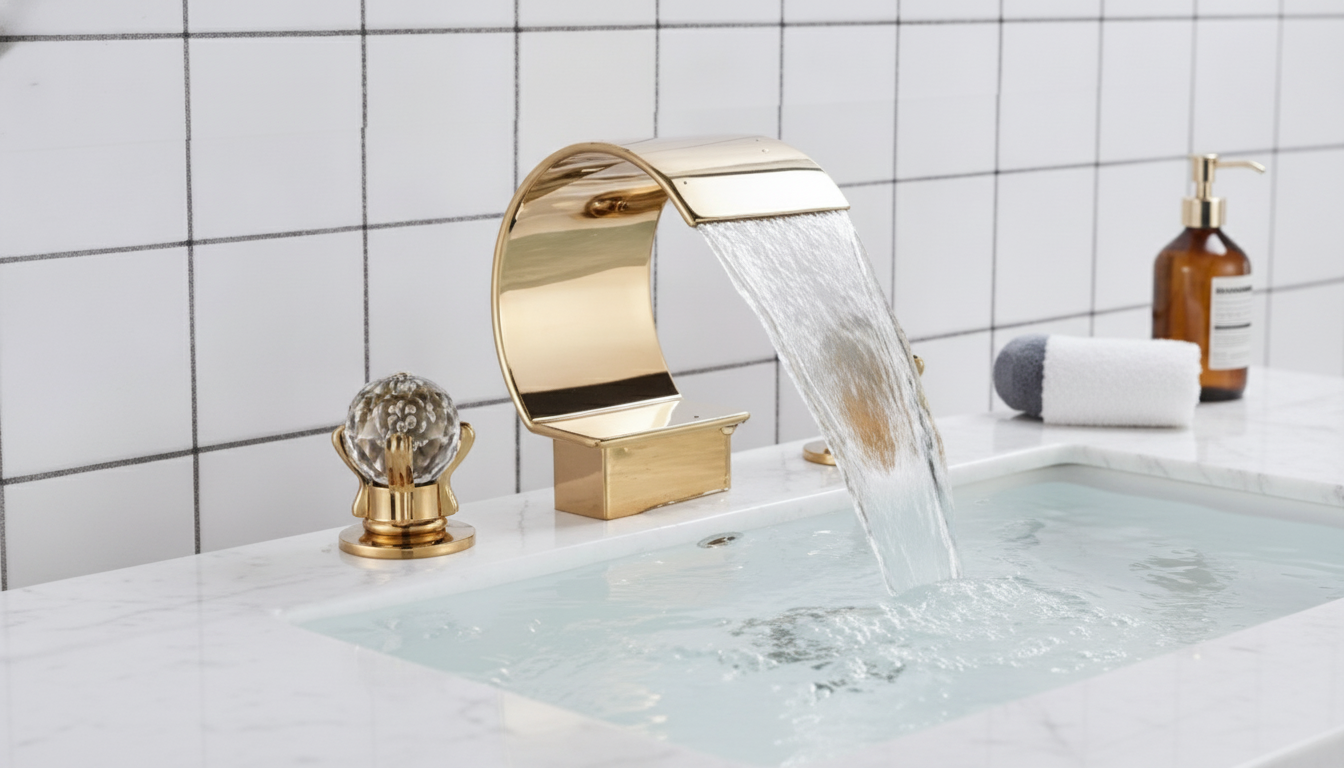
Waterfall Bathroom Basin Faucet – Deck Mounted Cold & Hot Water Mixer, 3 Holes
A waterfall spout can turn a quick rinse into a calmer, spa-like moment—without giving up the practical need for reliable hot/cold control. This deck-mounted, 3-hole mixer setup is made for vanities and basins that use separate handle holes, pairing a wide open-channel stream with adjustable temperature for comfortable handwashing, skincare, and everyday grooming.
What Makes a Waterfall Basin Faucet Different
Unlike a standard faucet that sends water through an aerator as a narrow jet, a waterfall basin faucet creates a smooth, sheet-like flow. That design change affects both the look and the feel at the sink.
- Open, wide spout: Delivers a broad water sheet rather than a tight, aerated stream.
- Visual feedback: The water sheet is easy to see, helping you judge coverage while rinsing hands or face.
- Modern styling: Complements contemporary vanities, especially vessel sinks and rectangular basins where clean lines stand out.
Deck-Mounted, 3-Hole Layout: Fit and Compatibility
A 3-hole waterfall faucet set is designed for installations where the spout and two handles each have their own opening. Before ordering, it’s worth taking a few quick measurements to avoid last-minute surprises during installation.
- Confirm hole count and spacing: Three holes are required—one for the spout and one each for hot and cold handles.
- Check basin geometry: Waterfall flow looks great, but it can splash if the stream lands too close to a steep bowl wall.
- Match reach and height to the bowl: Aim for a stream that lands closer to the drain area for cleaner rinsing and less mess.
- Verify supply compatibility: Make sure shutoff valves and connectors under the sink match your existing plumbing.
Quick Compatibility Checklist for a 3-Hole Waterfall Faucet
| Check | What to Measure/Confirm | Why It Matters |
|---|---|---|
| Hole count | 3 holes (spout + 2 handles) | Ensures the faucet set matches the sink/countertop cutouts |
| Hole spacing | Center-to-center spacing between holes | Prevents misalignment during installation |
| Basin depth | Depth from rim to bowl bottom | Helps reduce splash with a sheet-style stream |
| Spout reach | Distance from spout base to water outlet | Places the stream near the drain for cleaner rinsing |
| Supply lines | Hot/cold shutoff valves and connector size | Avoids surprises during hookup |
Cold & Hot Mixing: Everyday Control
Separate handles give you a classic three-piece look and can make temperature adjustment feel precise. Many people like the tactile feedback of dedicated hot and cold controls—especially when seasonal changes affect incoming water temperature.
- Fine-tune temperature: Small handle adjustments can help you dial in a comfortable mix for shaving, washing, or contact lens routines.
- Prevent reversed operation: Identify hot and cold supply lines before hookup so left/right controls behave as expected.
- Predictable mixing: Gradual blending can feel steadier for users who prefer separate controls over a single lever.
Materials, Finish, and Longevity Considerations
Bathroom faucets live in a high-moisture zone and face frequent cleaning, so materials and finishing matter. A corrosion-resistant body and a durable surface finish help maintain appearance and function over time.
- Corrosion resistance: Look for sturdy construction suited to daily exposure to humidity.
- Hard-water upkeep: Flat waterfall lips show mineral spotting more easily, so regular wipe-downs can keep the spout looking crisp.
- Smooth internal waterway: A cleaner internal path helps the waterfall sheet stay even and consistent.
Installation Overview (What to Expect)
If you’re replacing an existing 3-hole faucet, the process is typically straightforward, but careful alignment is important for a three-piece set.
- Shut off water at the stop valves before removing the old faucet.
- Dry-fit the spout and handles to confirm alignment across all three holes.
- Secure mounting hardware from below and confirm the faucet sits flush without rocking.
- Connect hot and cold supply lines to the correct valves and tighten per manufacturer guidance to avoid thread damage.
- Run water and check for leaks at every connection; re-check after several hours of normal use.
For fixture performance and water savings considerations, it can help to review guidance such as EPA WaterSense — Bathroom Faucets. If you’re working on a broader bathroom update, local code requirements may reference standards like the International Plumbing Code (IPC).
Water Pressure, Flow Feel, and Splash Management
Waterfall streams can look stronger than they are because the flow is spread wide. Splash is influenced far more by the basin’s shape and the stream landing point than by the waterfall style itself.
- Match faucet to basin size: Larger basins or deeper bowls are typically more forgiving with a sheet-style flow.
- Aim toward the drain: A stream that lands near the center reduces splash and keeps rinse water contained.
- Manage high pressure: If the home’s pressure is very high, verifying regulation can protect fixtures and improve comfort.
Care and Cleaning for a Clear Waterfall Stream
When This Faucet Style Is a Good Match
Shop In-Stock Picks
- Waterfall Bathroom Basin Faucet – Deck Mounted Cold & Hot Water Mixer, 3 Holes ($46.01)
- Personalized Balloon Letter Necklace ($5.51)
FAQ
Will a 3-hole waterfall faucet fit any 3-hole sink?
Not always. Even with three holes, spacing, deck thickness, and basin shape can differ, so measure center-to-center hole spacing and confirm spout reach/height to keep the stream positioned for low splash.
Do waterfall faucets splash more than standard faucets?
They can if the basin is shallow, the stream hits a steep bowl wall, or the water pressure is high. Keeping the stream aimed closer to the drain and moderating flow typically reduces splash.
How should a waterfall spout be cleaned to keep the flow even?
Use a soft cloth with mild cleaner and wipe the waterfall lip regularly to prevent spotting and buildup. In hard-water areas, occasional mineral removal helps maintain a smooth, uniform sheet of water.









Leave a comment