Rolling Stainless Work Table with Wheels for Fast Prep
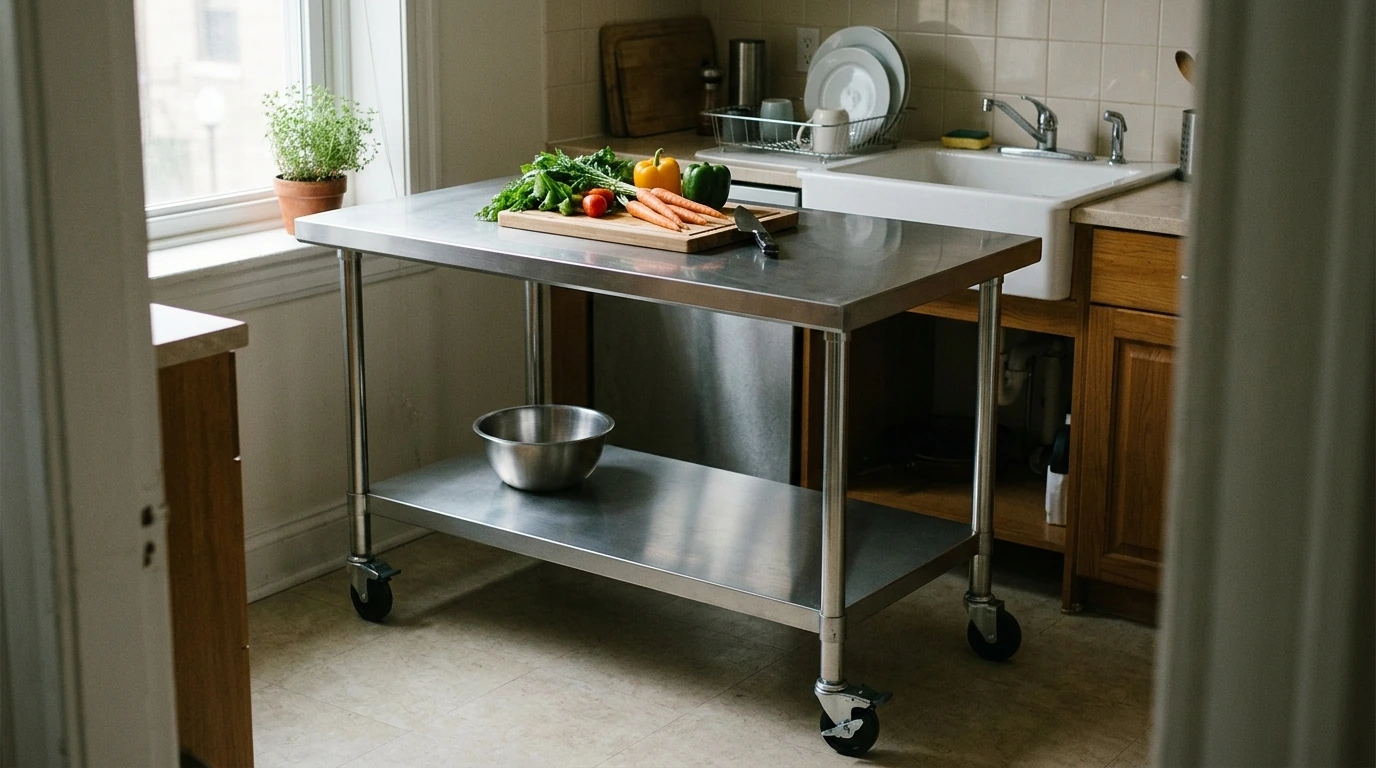
Stainless Steel Kitchen Work Table with Wheels: A Flexible Prep Station for Busy Kitchens
A mobile stainless steel work table adds reliable prep space without permanently taking over the room. With locking casters and an easy-to-clean surface, it can move where the work happens—then roll out of the way when the job is done. Whether you’re working in a compact home kitchen, a busy breakroom, or a high-output prep area, the right rolling table can make workflows smoother while keeping cleanup simple.
Why a rolling stainless steel work table earns its spot
A fixed island is great—until you need the floor space back. A wheeled stainless table is built for kitchens that change gears quickly from prep to cooking to serving.
- Extra prep surface, anywhere: Roll it next to the sink for rinsing produce, beside the range for plating, or near the fridge for quick assembly.
- Fast reconfiguration for small spaces: Wheels let you open up traffic lanes for cleanup or guests without sacrificing worktop area.
- Stainless stands up to kitchen reality: It tolerates moisture, heat, and frequent wiping better than many wood or laminate tops.
- Useful beyond cooking: Set it up as a coffee station, a pantry overflow cart, or a grilling side table when the main counters are full.
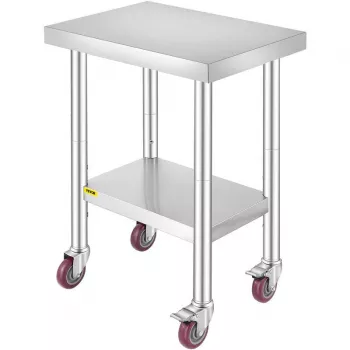
If you want a ready-to-roll option, consider the Stainless Steel Kitchen Work Table with Wheels for flexible prep and easy repositioning.
What to check before buying
Rolling tables look similar at a glance, but day-to-day satisfaction usually comes down to fit, caster performance, and how solid the frame feels when you lean into a task.
Quick fit-and-function checklist
| Decision point | What to measure or confirm | Why it matters |
|---|---|---|
| Overall footprint | Width × depth in the intended parking spot | Prevents blocking walkways and cabinet doors |
| Working height | Top height compared with existing counters | Improves comfort for prep and reduces back strain |
| Doorway clearance | Narrowest doorway/hallway it must pass through | Avoids getting stuck after assembly |
| Locking casters | At least 2 locks; confirm lock type (wheel + swivel if available) | Keeps the table from drifting during cutting and mixing |
| Weight support | Max load for top and shelf (if specified) | Protects against wobble, bending, and caster failure |
| Undershelf clearance | Height from shelf to top (or shelf to floor) | Determines whether bins/appliances actually fit |
- Tabletop size: Measure both the “home base” spot and the route it must roll through (tight corners, doorways, narrow galley aisles). A table that fits the room but can’t pass the doorway becomes a permanent obstacle.
- Load capacity: Think beyond cutting boards. Plan for stand mixers, countertop ovens, stockpots, bulk bags, or a bus tub full of dishes.
- Caster quality: Smooth rolling matters on tile and transitions. For real stability, look for at least two locking casters (and ideally locks that reduce swivel, not just wheel spin).
- Shelf style and clearance: An undershelf is valuable storage for sheet pans, small appliances, or ingredient bins—if the height works for what you actually own.
- Edges and corners: Rolled or rounded edges feel better on forearms and are less likely to snag towels and aprons.
- Noise and vibration: Heavier-duty casters and a well-braced frame tend to rattle less on uneven floors.
Everyday setups that make the most of mobility
The best part of a wheeled work table is that it can follow your workflow rather than forcing you to work around it.
- Prep line: Roll next to the sink for washing and trimming, then move beside the stove for finishing and plating.
- Baking station: Park it near the pantry; store flour and sugar bins on the shelf and keep a mixer on top for quick setup.
- Appliance dock: Dedicate the surface to an air fryer, toaster oven, or rice cooker, then roll it away to clear counters for dinner service.
- Serving and buffet: Use it as a staging area for platters, utensils, and warmers during gatherings, then return it to the kitchen afterward.
- Outdoor cooking helper: Position it beside a grill for clean tray landing and prep (keep it covered and dry when not in use).
For heavier prep tasks—like pounding cutlets or working through tougher cuts—pairing a stable rolling surface with the right tool can speed up results. A Commercial Meat Tenderizer can be a practical add-on when you’re setting up a dedicated prep station.
Stability and safety: keeping a wheeled table steady
Good housekeeping and clear pathways also reduce slip and trip risks around mobile equipment. OSHA’s guidance on walking-working surfaces is a helpful reference for keeping floors and routes safer: https://www.osha.gov/walking-working-surfaces.
Cleaning and care for a long-lasting stainless surface
For food-contact practices and sanitizing basics, the FDA Food Code is a reputable reference: https://www.fda.gov/food/fda-food-code/food-code-2022. If you’re comparing equipment standards, NSF’s overview explains what certification generally means for food equipment: https://www.nsf.org/consumer-resources/articles/what-is-nsf-certification.
A practical option to add flexible prep space
FAQ
Do the wheels lock, and is the table stable enough for chopping?
Look for at least two locking casters, and lock them before chopping or mixing. Stability also depends on even weight distribution, tight fasteners, and a level floor—if you notice wobble, re-check caster bolts and frame alignment.
How should stainless steel be cleaned without scratching?
Use mild soap and warm water, wipe with the grain using a soft cloth, then rinse and dry. Avoid steel wool; use a non-abrasive pad and a plastic scraper for stuck-on residue.
Can a rolling stainless work table be used outdoors?
Yes for temporary use like grilling prep or serving, but keep it covered and dry it after exposure to moisture. Avoid long-term storage in rain or salty air, and clean debris from casters after outdoor rolling.








Leave a comment