Montessori Wooden Animal Train: Sensory Learning Play
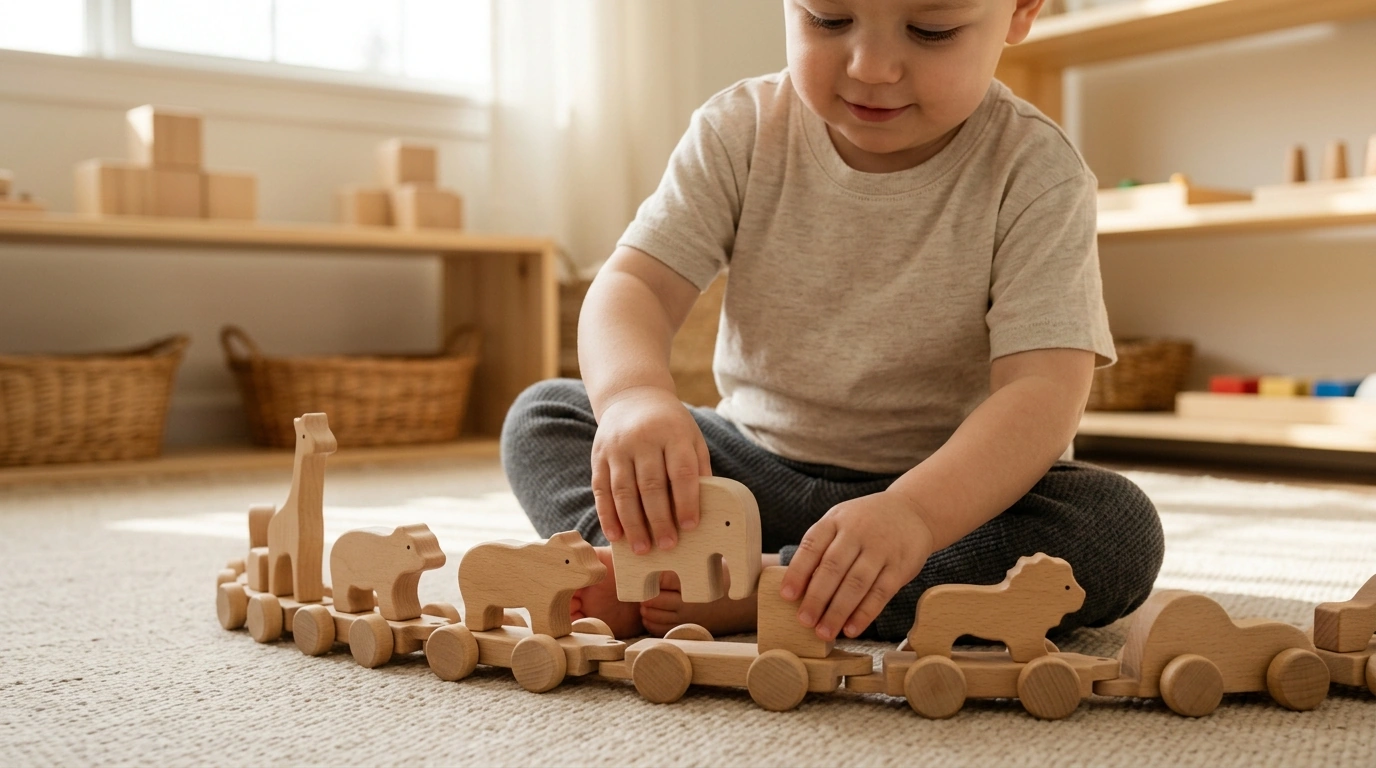
Montessori Wooden Animal Train Toy Set – Educational Sensory Toy for Kids
A wooden animal train set can turn everyday play into hands-on learning through stacking, pulling, matching, and pretend adventures. With simple pieces and a child-led pace, this kind of screen-free toy supports sensory exploration and early skills like coordination, sequencing, and language—while still leaving plenty of room for imagination.
What makes an animal train set “Montessori-style”
“Montessori-style” play is less about flashy features and more about purposeful, repeatable actions that kids can master through practice. A wooden animal train set fits naturally into that approach because the play is tactile, calm, and open-ended.
- Simple, purposeful pieces that invite exploration without flashing lights or scripted outcomes
- Hands-on problem-solving through connecting cars, balancing pieces, and repeating actions
- Open-ended pretend play with animal characters to build storytelling and vocabulary
- Child-led pacing: the toy works for short bursts of play or longer, focused sessions
For more guidance on choosing age-appropriate toys, the American Academy of Pediatrics shares practical tips here: Selecting Appropriate Toys for Young Children.
How this toy supports sensory and early learning
Wooden toys offer a distinct sensory experience: the weight feels “real,” the texture is naturally varied, and the pieces respond directly to a child’s effort. That immediate feedback is what helps kids connect actions to outcomes.
- Tactile input from smooth wood surfaces and shaped animal figures supports sensory discovery
- Fine motor practice from grasping, aligning, and connecting train parts
- Hand–eye coordination as children match connectors and position pieces accurately
- Early math concepts through counting cars/animals, comparing sizes, and simple sequencing
- Language development through naming animals, colors, actions, and creating short stories
When kids repeat “connect, pull, park, and reconnect,” they’re doing real work: building control in their hands, refining timing and precision, and practicing focus in a way that still feels like play.
Skill-building play ideas (quick, repeatable activities)
These activities are easy to set up, short enough for busy days, and repeatable—so children can revisit them and gain confidence.
- Connect-and-pull path: Create a simple route (around a rug edge or along a tape line) and encourage slow pulling to practice control and balance.
- Animal roll call: Line up animals and name them, then ask for “find the cow” or “find the animal with spots” to build listening and recall.
- Color and pattern train: Alternate animals or cars in a repeating pattern (ABAB, AABB) and let your child “check” the pattern before pulling.
- Sound and movement game: Assign each animal an action (stomp, hop, tiptoe) and act it out after each car is connected.
- Story starter: Place the train near blocks or books and prompt a short “where are they going?” narrative (farm, forest, vet, zoo).
Age guide: what to focus on as kids grow
The same train set can meet kids where they are. The key is adjusting the goal—fewer pieces and simpler steps for toddlers, and longer sequences plus cooperative play for older preschoolers.
Age-based play goals and examples
| Age range | Focus skill | Example activity | How to make it easier |
|---|---|---|---|
| 12–24 months | Grasping and cause-and-effect | Push/pull one car and name one animal | Use fewer pieces; demonstrate once, then let the child try |
| 2–3 years | Matching and coordination | Connect 2–3 cars in a row; park at a “station” | Pre-connect part of the train; use a shorter route |
| 3–4 years | Sequencing and language | Make an animal pattern (cat–cow–cat–cow) and tell a short story | Offer two pattern choices; use picture cues |
| 4+ years | Problem-solving and cooperative play | Create a route with obstacles (pillows/blocks) and take turns being “conductor” | Reduce obstacles; set a simple start-to-finish goal |
If a child gets frustrated, simplify the task to one step (like connecting just two cars) and build back up when it feels easy again.
Safety, materials, and everyday care
For additional toy safety guidance, the U.S. Consumer Product Safety Commission offers helpful resources here: Toy Safety. For play-focused toy selection tips, see NAEYC’s overview: Choosing Toys for Children.
When this set makes a great gift
Product details and where to get it
If you’re shopping for an everyday learning toy that holds attention without overstimulation, the Montessori Wooden Animal Train Toy Set – Educational Sensory Toy for Kids is available now for $40.67 (USD) and is currently in stock.
For older kids (or adults who love careful, hands-on builds), a craft-style option that pairs well with screen-free time is the DIY 3D Puzzle Miniature House Kit (in stock).
Quick overview
| Item | Details |
|---|---|
| Name | Montessori Wooden Animal Train Toy Set – Educational Sensory Toy for Kids |
| Price | $40.67 USD |
| Availability | In stock |
| Primary play types | Sensory exploration, fine motor, matching, pretend play |
FAQ
What age is a wooden animal train set best for?
Most wooden animal train sets work well from the toddler years through preschool, especially as play shifts from simple push/pull to patterns, stories, and longer sequences. For younger toddlers, supervision is important depending on the size and number of pieces.
How does a Montessori-style toy support learning without being “teaching” focused?
It encourages child-led repetition and hands-on problem-solving—kids learn by doing, adjusting, and trying again. Over time, skills like coordination, sequencing, attention, and language grow naturally through open-ended play.
How should wooden toys be cleaned and stored?
Wipe with a lightly damp cloth, avoid soaking or harsh chemicals, and dry fully before putting pieces away. Store in a dry spot and do periodic checks for wear, loose parts, or rough edges.









Leave a comment