Heavy-Duty Geotextile Fabric: 12.5×50 Weed Barrier
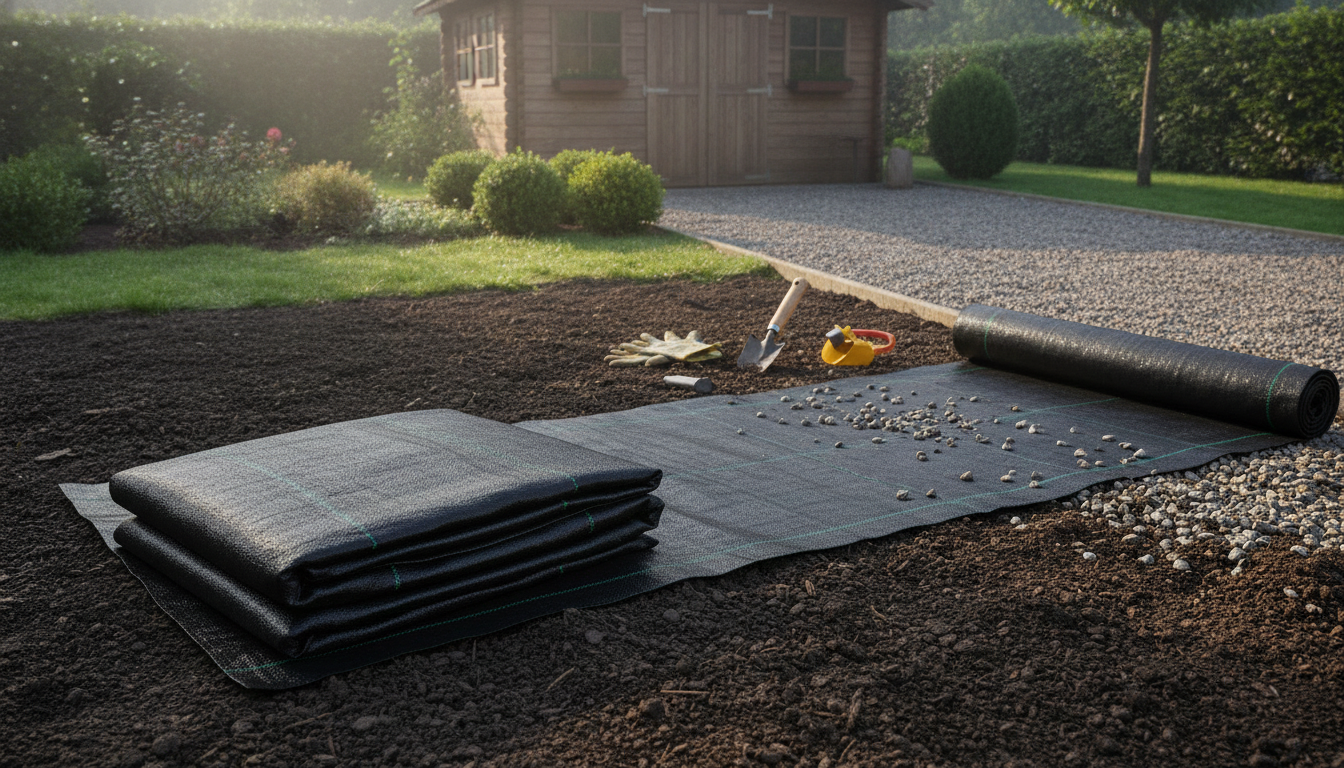
Heavy-Duty Geotextile Weed Barrier for Driveways and Landscaping (12.5×50 ft)
A heavy-duty geotextile weed barrier is built to do more than “block weeds.” When installed correctly, it separates soil from aggregate, reduces rutting in gravel areas, and helps water move through the surface instead of turning into mud. It’s a practical upgrade for high-traffic driveways, long garden paths, and landscape beds where stability and low maintenance matter.
What This Fabric Does (and What It Doesn’t)
Separation that protects your gravel base
The biggest performance gain is separation: the fabric keeps gravel from sinking into soft subgrade and reduces stone/soil mixing that leads to ruts and potholes over time—especially after wet weather or freeze-thaw cycles.
Weed suppression that works best with proper coverage
By blocking light, the fabric helps suppress weeds coming up from below. Best results come from pairing it with adequate top cover—mulch, rock, or a proper gravel depth—so sunlight can’t reach seams or openings.
Drainage support (not drainage design)
Geotextile is permeable, letting water pass while holding back soil particles. That said, it isn’t a substitute for proper grading, base depth, or edge restraint. Standing water, thin gravel, and poorly contained stone can still cause washouts and exposure.
Best Uses Around the Property
- Gravel driveways and parking pads: improves stability and reduces mixing of stone and subgrade.
- Walkways and garden paths: keeps stone cleaner and reduces weeds between rocks.
- Under mulch in landscape beds: lowers weeding time while still allowing air and water movement.
- Behind retaining walls and along drainage runs (where appropriate): helps filter soil while allowing water to move.
- Not ideal under thin decorative stone without edging: shifting stone can expose seams and create visible fabric lines.
Driveway Performance: Separation, Drainage, and Durability
Separation is the driveway advantage
Driveways fail when aggregate “pumps” into soft soil and disappears over time. A tough geotextile layer slows that process by keeping the base material where it belongs, so the driveway holds shape longer with fewer top-ups.
Drainage depends on the whole system
Permeable fabric helps reduce mud formation, but the driveway still needs a slope and, in many cases, a crown so runoff exits the surface instead of pooling. For a helpful overview of how geosynthetics support pavement and base layers, see the Federal Highway Administration’s geosynthetics overview.
Puncture resistance and UV exposure
Angular gravel and sharp subgrade debris can stress any fabric. If the subgrade is littered with roots, chunks of old asphalt, or sharp stones, remove them or add a thin leveling layer before rolling out fabric. Cover the fabric promptly—UV exposure and exposed edges shorten service life.
Sizing and Coverage for a 12.5×50 ft Roll
A 12.5×50 ft roll covers 625 sq ft before overlaps, trimming, and edge anchoring. In real projects, overlaps and irregular shapes reduce usable coverage. Typical seam overlap is 6–12 inches for landscaping and 12–24 inches for driveways or very soft subgrades. For multi-roll layouts, stagger seams to avoid creating one long “hinge line.”
| Project area (sq ft) | Recommended overlap | Estimated usable coverage per roll | Rolls needed (estimate) |
|---|---|---|---|
| 300 | 6–12 in | 520–580 sq ft | 1 |
| 600 | 12–24 in | 460–540 sq ft | 2 (tight) or 2 (safer) |
| 900 | 12–24 in | 460–540 sq ft | 2–3 |
| 1200 | 12–24 in | 460–540 sq ft | 3 |
Installation Steps for Gravel Driveways
- Prep and grade: remove vegetation, roots, and soft spots. Shape the surface so runoff has a clear path.
- Compact the subgrade: a plate compactor reduces future settling and helps the fabric stay flat.
- Roll out with light tension: avoid wrinkles that can telegraph through gravel and create weak points.
- Overlap and secure seams: overlap toward downhill flow; pin or staple temporarily so the fabric won’t creep as stone is placed.
- Add gravel in lifts: spread evenly without spinning tires on bare fabric. Compact each lift for a stronger surface.
- Finish edges: use edging, berms, or thicker shoulder stone to reduce fabric exposure and keep gravel contained.
Installation Tips for Landscaping Beds and Paths
For practical guidance on mulch depth and why weeds can still appear above barriers, the University of Minnesota Extension mulch guide is a useful reference.
Common Problems and How to Avoid Them
Product Snapshot: 12.5×50 ft Heavy-Duty Geotextile Weed Barrier
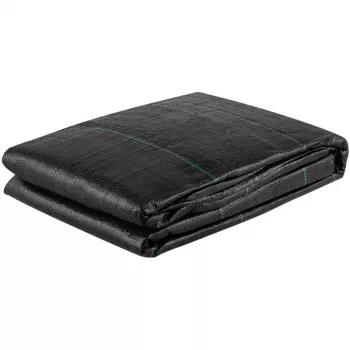
- Main pick: Heavy Duty Geotextile Fabric Weed Barrier for Driveways & Landscaping – 12.5×50 ft
- Also available: 5-Step Folding Dog Stairs for Cars
FAQ
How much overlap is needed for geotextile fabric under a gravel driveway?
Plan on 12–24 inches of overlap, with more overlap for softer soils and heavier traffic. Orient overlaps so water sheds downhill and stagger seams when using multiple rolls to avoid a single continuous weak line.
Will weeds still grow with a weed barrier fabric installed?
The fabric helps block weeds from below, but weeds can still sprout in windblown soil and organic debris that accumulates on top. Keeping the fabric fully covered with adequate mulch/rock and periodically raking off buildup greatly reduces this.
Can geotextile fabric be installed directly over grass?
Removing vegetation is best, especially for driveways, because buried grass can decompose and create voids that lead to settling and uneven gravel. For the most stable result, excavate as needed, grade, and compact before laying fabric.









Leave a comment