Toddler Nightmares: Comfort Scripts & Bedtime Fixes
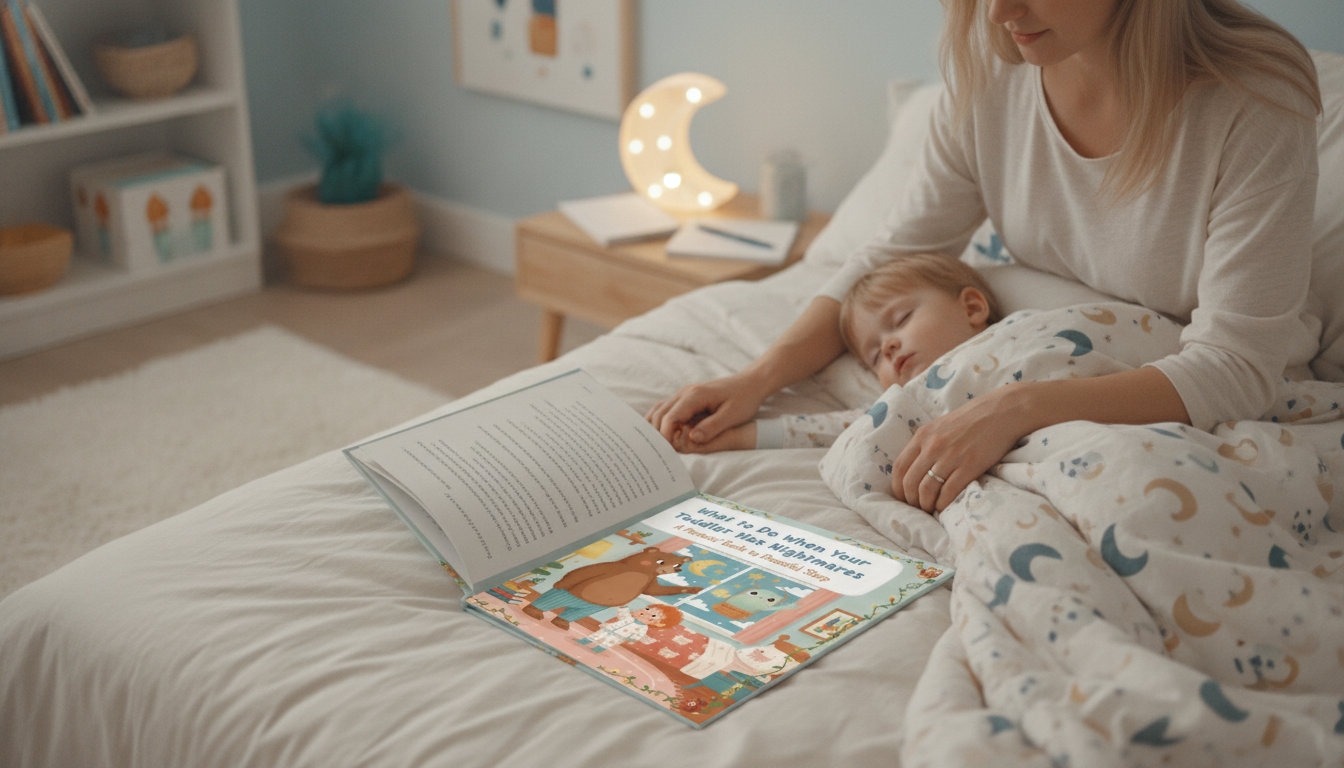
Helping a Toddler Through Nightmares: Calm Comfort, Clear Routines, Better Sleep
Nightmares can leave toddlers scared, clingy, and resistant to bedtime—while parents feel exhausted and unsure what to say or do. A steady response, a predictable routine, and a few simple comfort tools can reduce fear at night and help everyone get back to sleep faster.
What Nightmares Look Like in Toddlers
Nightmares are frightening dreams that usually happen in the second half of the night, when sleep is lighter. A toddler often wakes fully, cries for a caregiver, and may be able to describe something scary in simple words or images (“monster,” “dog,” “boom,” “fall”).
Common themes include separation, monsters, animals, falling, or loud noises—often reflecting new experiences, stress, or changes in routine. Nightmares can also cluster during developmental leaps, illness, overtiredness, new childcare settings, travel, or after exposure to intense stories and screens.
Nightmares vs. Night Terrors: Quick Differences
| Feature | Nightmares | Night terrors |
|---|---|---|
| When they happen | Later night / early morning | First third of the night |
| Child awake? | Usually wakes fully | Often not fully awake |
| Memory in morning | May remember some details | Typically no memory |
| Comforting helps? | Yes—responds to reassurance | Limited—may resist soothing |
| What to do | Comfort, reassure, resettle | Keep safe, wait it out, avoid waking forcefully |
For more background on how these sleep disruptions differ, see guidance from HealthyChildren.org (American Academy of Pediatrics).
The First 2 Minutes After a Nightmare: A Simple Response Plan
When your toddler calls out, the goal is to help their body settle fast without turning the nightmare into a long, bright, fully-awake event.
- Go to your child promptly and keep the environment calm: low light, quiet voice, slow movements.
- Validate feelings without escalating the story: “That was scary. You’re safe. I’m here.”
- Offer a brief grounding step: name 2–3 real things in the room (blanket, stuffed animal, nightlight).
- Use one consistent comfort action (hug, hand on back, short cuddle in chair) rather than changing strategies each night.
- Avoid lengthy questioning or rehashing details at 2 a.m.; it can increase alertness and make falling back asleep harder.
If your toddler is asking for repeated reassurance, keep your words the same each time and gently guide them back to their bed and their body cues (slow breathing, heavy blanket, a familiar phrase).
What to Say (and What to Avoid Saying) So Fear Doesn’t Grow
Toddlers do best with short, repeatable scripts. The aim is confidence and safety, not a deep discussion.
- Helpful phrases: “You’re safe at home,” “Mom/Dad is close,” “Dreams feel real, but they can’t hurt you,” “Let’s help your body feel calm.”
- Keep reassurance short and consistent; toddlers benefit from hearing the same words in the same order.
- Avoid: “There’s nothing to be scared of” (can feel dismissive) or “I’ll stay all night” (can create new expectations and bedtime battles).
- Avoid “monster checks” that become a nightly ritual; if you use one, keep it brief and plan to fade it out.
- If your child wants the story changed, try a one-sentence “new ending”: “The puppy came and chased the scary thing away, and you fell asleep safe.”
If you’d like a structured set of scripts you can stick to when you’re tired, What to Do When Your Toddler Has Nightmares | Ebook Guide for Parents | Practical Comforting Tips & Bedtime Solutions organizes common scenarios (clingy wake-ups, repeated call-backs, “don’t leave!” loops) into simple, repeatable steps.
Preventive Bedtime Routine Tweaks That Reduce Nightmares
Nightmares are also more likely when sleep is disrupted. If you want a deeper dive into factors that can worsen dream intensity, the Sleep Foundation’s overview of nightmares is a helpful reference.
Daytime Tools: Building Bravery Without Turning Nightmares Into a Big Event
Some families find that “confidence play” during the day makes bedtime smoother—building, fixing, and pretend problem-solving. A hands-on activity like the Kids Wooden Tool Bench Set can support that sense of competence (“I can handle it”) without making nights all about fear.
For a small comfort token that can be worn or held during the bedtime routine (and kept consistent), the Personalized Balloon Letter Necklace can work as a “bravery reminder” tied to your family’s bedtime phrase—something your toddler can touch while taking a slow breath.
When to Seek Extra Support
You can also review general guidance from the NHS on night terrors and nightmares in children for additional perspective on when extra support may be needed.
A Step-by-Step Guide for Consistent Bedtime Solutions
- For a structured plan that covers common triggers, calming scripts, routine checklists, and practical troubleshooting, use: What to Do When Your Toddler Has Nightmares | Ebook Guide for Parents | Practical Comforting Tips & Bedtime Solutions.
- Focus on consistency over perfection: the same response at night, the same wind-down order, and a small set of coping tools practiced during the day.
- Choose 1–2 changes to start (earlier bedtime + a short reassurance script) and keep them steady for 10–14 nights before adding more.
FAQ
How long do toddler nightmares usually last?
Most nightmares pass within a few minutes once your toddler is fully awake and reassured. Some children have clusters for days to a few weeks during transitions, but patterns often improve with a consistent response and avoiding overtired bedtimes.
Should a toddler sleep in the parents’ bed after a nightmare?
It can calm things quickly, but it may also create a new sleep association that leads to more wake-ups. A common compromise is a brief cuddle, then resettling in their own bed; if you use a temporary floor mattress, set a clear plan to fade it out.
Can screens or certain stories cause more nightmares?
Yes—stimulating, fast-paced, or scary content can increase bedtime fears and intensify dreams. Choose calmer media earlier in the day and keep a screen-free wind-down window (about 60 minutes) before sleep.











Leave a comment