Travel-Friendly 20-in-1 Push-Up Board + Bands Setup
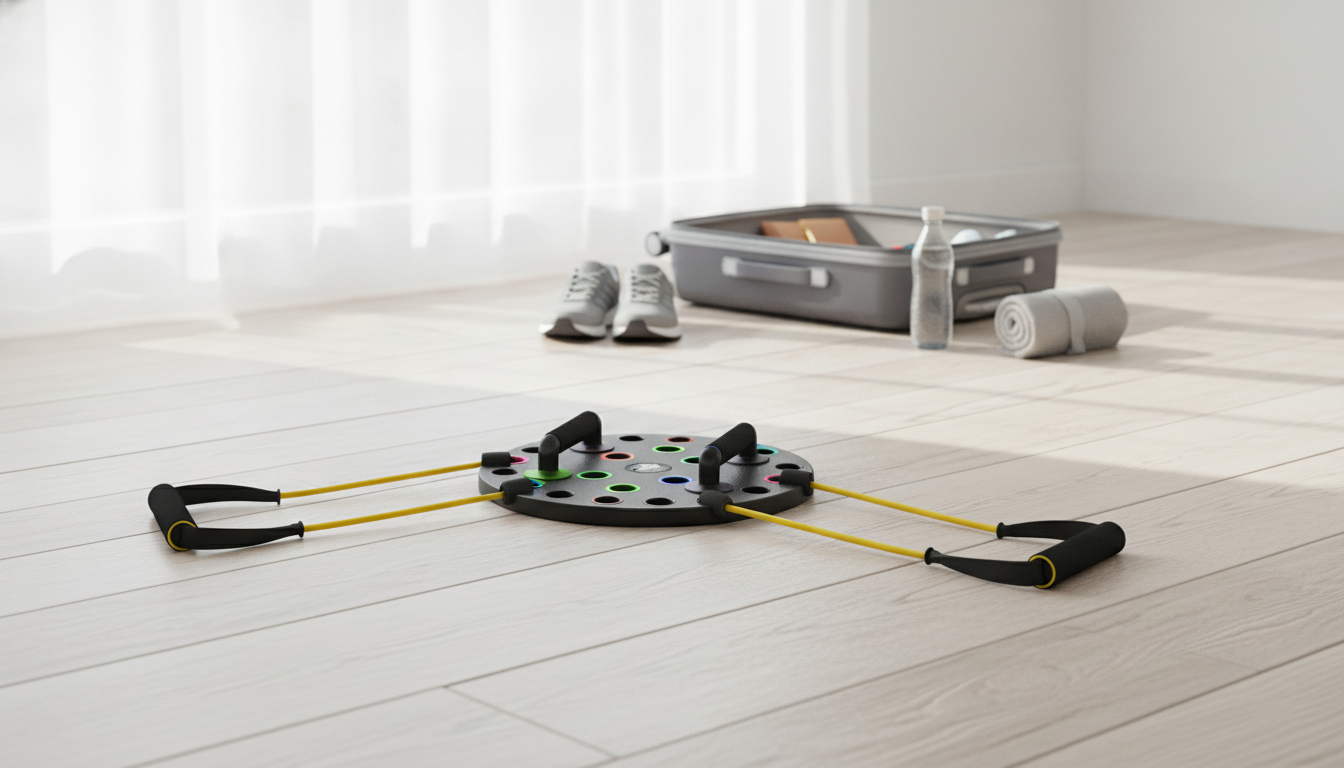
Portable Strength Training That Fits in a Closet (or a Carry-On)
A compact push-up board system can turn limited space into a structured strength setup for upper body and core training. With color-coded hand positions and attachable resistance bands, workouts can be adjusted for different muscle groups, strength levels, and time constraints—at home or on the go. Instead of guessing where your hands should go each set, the board’s guided slots make it easier to repeat the same setup, track progress week to week, and rotate variations for more balanced development.
What This Home Gym System Includes
This style of portable system is built around a few simple components that work together for fast setup and a wide range of movements:
- Foldable push-up board platform designed to guide hand placement for multiple variations
- Detachable push-up handles to reduce wrist strain compared with flat-palmed push-ups
- Resistance bands to add pulling/pressing options beyond bodyweight work
- Portable format intended for apartments, travel, and quick setup sessions
If you want the complete kit, the Portable 20-in-1 Push Up Board with Resistance Bands – Home Gym Fitness System is designed to cover these essentials in one compact package.
How the 20-in-1 Board Changes Push-Ups
Small adjustments in hand position can significantly change which muscles do most of the work during a push-up. A guided board makes those changes more consistent, which is helpful for both beginners learning form and experienced trainees trying to target specific weak points.
- Hand position changes shift emphasis across chest, shoulders, triceps, and upper back support musculature
- Stable handle slots help keep positions consistent set-to-set, making progress easier to track
- Elevated handles can increase range of motion when comfortable and controlled
- Color/slot guidance can reduce guesswork when building a simple weekly rotation
Common Push-Up Emphasis by Setup
| Setup focus | What changes | Primary emphasis | Good for |
|---|---|---|---|
| Narrow stance | Hands closer under shoulders | Triceps and inner chest emphasis | Strengthening lockout and triceps endurance |
| Standard stance | Hands slightly wider than shoulders | Chest and triceps balance | General strength and fitness |
| Wide stance | Hands wider with controlled depth | Chest emphasis with shoulder involvement | Chest volume with lighter loads |
| Shoulder-forward variation | Hands slightly forward and stable | Shoulders and upper chest involvement | Shoulder stability and pressing endurance |
Using the Resistance Bands for Full-Body Sessions
Push-ups alone can build a strong upper body, but adding bands expands the menu: you can train pulling patterns, arm isolation, and higher-rep “pump” work without needing dumbbells. This matters for posture and shoulder health, since balanced training usually includes both pushing and pulling volume.
- Add bands to increase loading for presses, rows, curls, extensions, and lateral raises (depending on attachment options)
- Pair push-up sets with band rows to balance pushing and pulling volume
- Use lighter tension for warm-ups and higher reps; increase tension gradually for strength work
- Keep band anchors and grips secure before each set; replace bands if worn or cracked
For general resistance-training guidance on sets, reps, and weekly volume, see the American College of Sports Medicine (ACSM) resistance training resources and the Mayo Clinic overview of strength training.
A Small-Space Weekly Plan (20–30 Minutes)
A repeatable schedule works well with a guided board because the setups are quick to recreate. Keep sessions short, focus on clean reps, and progress gradually.
- Day A (Push + Core): push-up board sets + band overhead press (or front raise) + plank variations
- Day B (Pull + Arms): band rows + band curls + triceps extensions + scapular retractions
- Day C (Full Body Circuit): alternating push-ups, band rows, band squats (if feasible), and core finisher
- Progression ideas: add 1–2 reps per set, add one set, slow the lowering phase (3 seconds), or increase band tension
- Recovery: at least one rest day between intense sessions; prioritize sleep and hydration
If you’re returning to exercise after a long break or managing a health condition, the NIH MedlinePlus exercise and physical fitness hub is a practical place to review general safety and activity basics.
Technique and Safety Checks
A portable system only helps if the reps stay consistent and controlled. Use these quick checks before you chase more reps or heavier band tension:
Who This Setup Fits Best
Product Details and Where to Get It
Product: Portable 20-in-1 Push Up Board with Resistance Bands – Home Gym Fitness System
Price: $44.51 USD
Availability: In stock
Best use: guided push-up variations plus resistance-band accessories for a compact strength routine
More In-Stock Picks
FAQ
Is a push-up board better for wrists than regular push-ups?
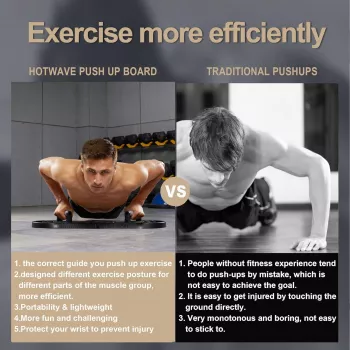
Often, yes: using handles can keep wrists in a more neutral position and reduce the extension stress of flat-palmed push-ups. If you have existing wrist pain or an injury, start with an incline setup or a shorter range of motion and stop if symptoms increase.
How often should push-ups and band training be done each week?
A practical range is 2–4 days per week, with at least one rest day between hard sessions for the same muscle groups. Progress by adding reps or sets, slowing tempo (especially the lowering phase), or increasing band tension gradually.
Can resistance bands replace weights for strength training?
They can build strength and muscle when the tension is challenging and you apply progressive overload over time. The main limitation is maximal loading for very high strength goals, but combining bands with bodyweight progressions (harder push-up variations, slower tempo, more sets) can go a long way.








Leave a comment