Dual-Handle Brass Deck-Mount Faucet: Fit, Install, Care
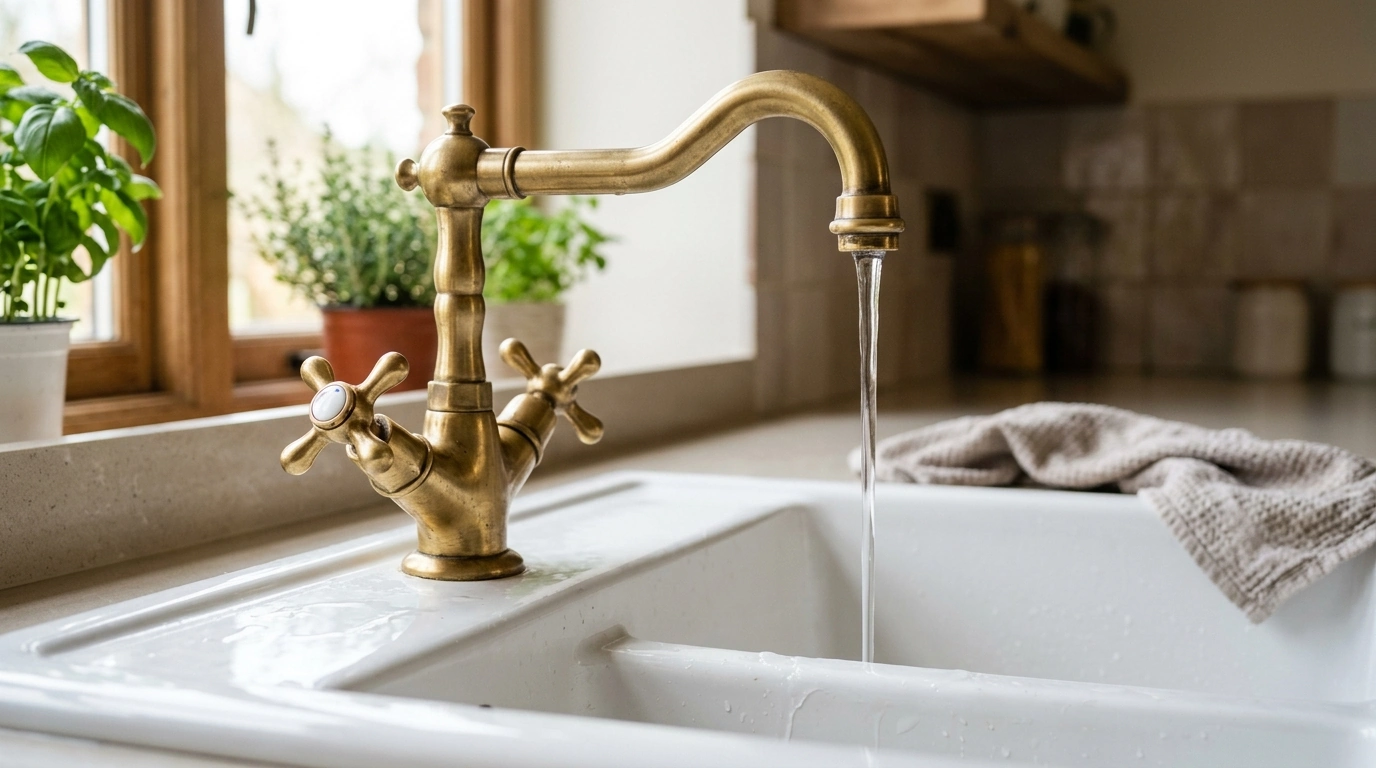
Integrated Brass Sink Faucet with Dual Handles – Hot & Cold Water Deck Mount
A dual-handle brass faucet brings classic control to everyday sink tasks—separate handles for hot and cold, steady flow, and a solid metal build that suits many kitchen or bathroom setups. This guide breaks down what this faucet style is meant to do, where it fits best, what to confirm before ordering, and how to keep it operating smoothly over time.
What this faucet is designed to do
A deck-mount, dual-handle faucet is all about straightforward, repeatable control. Instead of blending temperature from a single lever, you adjust hot and cold independently, which many households find intuitive for quick handwashing, dish rinsing, and general water use.
- Provides separate hot and cold control with two handles for predictable temperature adjustment.
- Deck-mount style suits sinks or countertops with compatible mounting holes.
- Brass construction supports a sturdy feel and long-term use in humid sink areas.
- Works well for routine handwashing, dish rinsing, and everyday household cleanup.
Key features that matter day to day
Small design details affect how a faucet feels during frequent use. Dual handles can make fine temperature tuning feel more gradual, while a compact deck-mount profile helps keep the sink area visually tidy.
- Dual-handle operation can make precise temperature changes easier for some users than a single-handle design.
- Integrated, compact profile helps keep the sink area uncluttered.
- Metal body (brass) is commonly chosen for durability and corrosion resistance compared with lightweight plastics.
- Deck-mount installation keeps the faucet stable when properly tightened and sealed.
If water efficiency is a priority, it can be useful to compare flow rates and aeration features across faucets and fixtures. The EPA’s WaterSense program is a helpful reference point for understanding water-saving performance in household plumbing products.
Fit and compatibility checklist before ordering
Most installation frustrations come down to mismatched hole layouts, limited clearance, or connector incompatibility. A quick measurement pass before you order can prevent extra adapters, drilling, or returns.
Quick pre-install checklist
| What to check | Why it matters | How to confirm |
|---|---|---|
| Mounting holes | Ensures the faucet can be installed without extra drilling | Count holes and measure spacing on the sink/counter |
| Clearance behind faucet | Prevents handle interference with backsplash or wall | Measure distance from holes to wall/backsplash |
| Spout reach | Helps aim water into the center of the basin | Measure from faucet center to basin center |
| Supply shutoff valves | Avoids surprises during installation | Locate and test shutoff valves under the sink |
| Thread/connector type | Prevents leaks from mismatched fittings | Match existing hoses/adapters to faucet connections |
For households focused on water quality and materials, it’s also worth staying informed about plumbing components and drinking-water contact considerations. The CDC’s overview on lead in drinking water and NSF’s consumer guidance on water system components can help when evaluating fixtures, filters, and older supply lines.
Installation overview for a deck-mount dual-handle faucet
Deck-mount installation is typically approachable with basic tools, especially when the existing sink already matches the hole pattern. The biggest priorities are preventing cross-threading, aligning the faucet before tightening, and checking every connection for seepage.
- Turn off hot and cold shutoff valves, then open the faucet to relieve pressure before removing the old unit.
- Clean the mounting surface so gaskets and sealants seat well and help prevent future seepage.
- Position the faucet and mounting hardware per the sink’s hole layout; keep the faucet aligned before tightening.
- Connect hot and cold supply lines carefully and avoid cross-threading; use thread sealant only where required by the connector type.
- Turn water back on slowly and check for leaks at every connection point; re-tighten gently as needed.
Performance and comfort tips
Once installed, a few small adjustments can make daily use feel noticeably better—especially when it comes to heat comfort, splash control, and maintaining an even stream.
- Set a comfortable maximum hot-water temperature at the water heater to reduce scald risk while preserving cleaning performance.
- If splashing occurs, consider adjusting aeration (if compatible) or reducing flow slightly at the shutoff valves.
- For frequent temperature changes, use consistent handle starting positions to reach your preferred warmth faster.
- Keep the spout outlet clean to maintain even flow; mineral buildup can distort the stream over time.
Care, cleaning, and longevity
When this style is a good choice
In-stock picks to consider
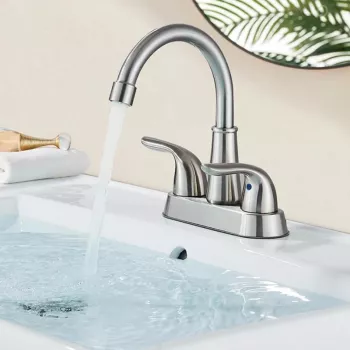
- Integrated Brass Sink Faucet with Dual Handles – Hot & Cold Water Deck Mount — a compact dual-handle option for hot/cold control in a deck-mount setup.
- Compact Portable Power Bank — handy to keep on hand during home projects or power outages when you need a quick phone recharge.
- DIY 3D Puzzle Miniature House Kit — a relaxing, hands-on build for downtime after tackling home updates.
FAQ
Will a deck-mount dual-handle faucet fit my sink?
Start by counting the mounting holes on your sink or countertop and measuring any spacing between them, then confirm there’s enough room behind the faucet for the handles to turn. Under the sink, verify hot/cold supply locations and connector compatibility; if available, check the sink’s spec sheet to confirm the intended faucet configuration.
Why is my new faucet dripping after installation?
Common causes include fittings that need a gentle re-tighten, a washer or cartridge that isn’t seated correctly, debris caught in the valve, or cross-threaded connectors. Shut off the water, re-check each connection carefully, and inspect for debris before turning the water back on and testing again.
How should a brass faucet be cleaned without damaging the finish?
Use mild soap and water with a soft cloth, then rinse and dry to minimize water spots. Avoid abrasive pads and harsh cleaners, and descale periodically in hard-water areas to help maintain an even flow and protect the finish.









Leave a comment