Sturdy 5-Level Metal Cat Tree for Large Cats
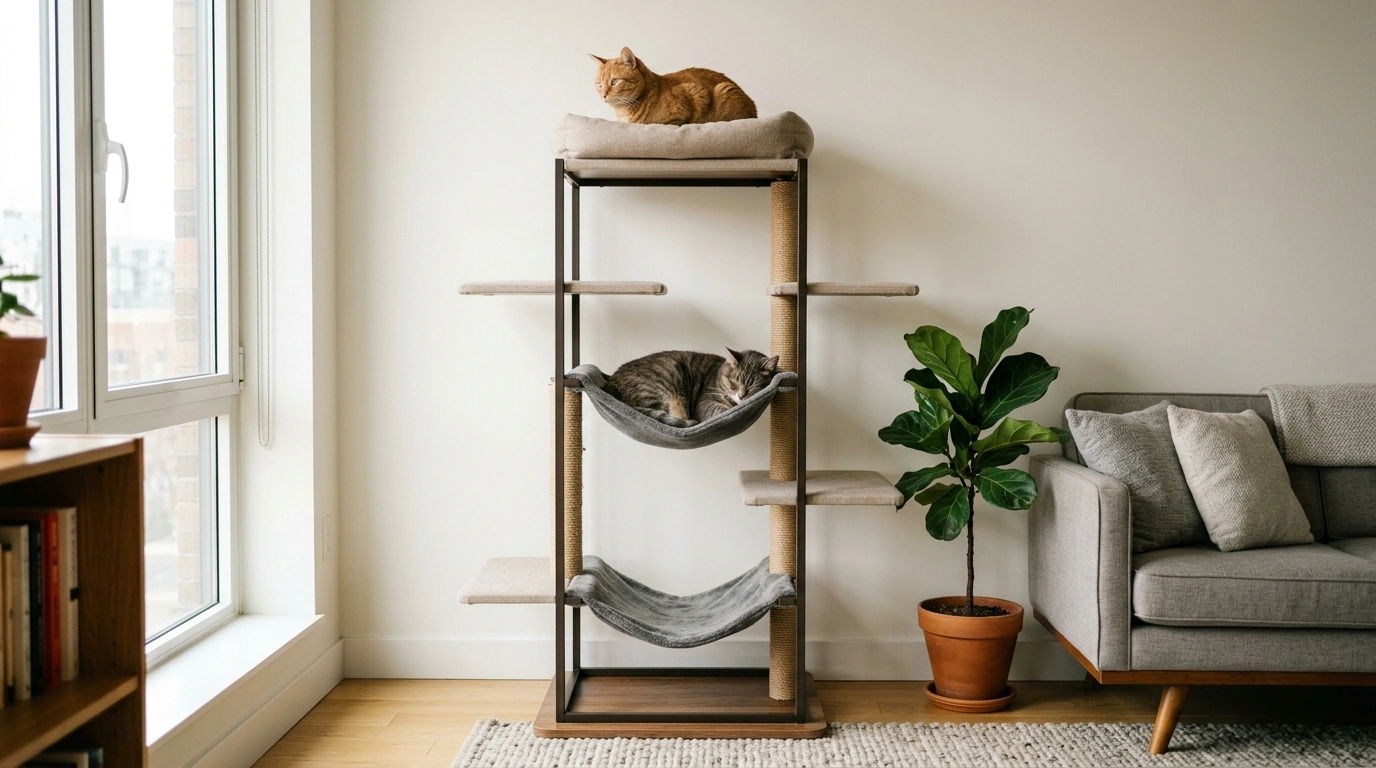
5-Level Cat Tree for Large Cats with Metal Frame, Hammock, and Top Perch
A sturdy multi-level cat tree can add vertical territory, lounging spots, and scratching options without taking over the room. This 5-level design focuses on stability for bigger cats, combining a metal frame with a hammock-style rest area and a top perch for surveying the space. When the layout is easy to climb and the structure feels steady underfoot, cats are more likely to use it daily for naps, play breaks, and calm observation.
Who this cat tree fits best
- Large cats that need a steadier structure when jumping up and down
- Multi-cat homes where vertical separation helps reduce crowding
- Apartments or smaller rooms that benefit from upward space rather than wide footprints
- Cats that alternate between hiding, lounging, and perching to watch household activity
Cats tend to feel more secure when they can choose different elevations and resting styles. Adding height and “zones” can also support enrichment routines, which organizations like International Cat Care (iCatCare) and the ASPCA commonly emphasize as part of a cat-friendly home environment.
What makes a metal frame different
- Improved rigidity compared with all-particleboard builds, helping reduce wobble during climbs
- Better support for elevated rest areas where heavier cats concentrate their weight
- A more stable base feel when the cat launches from the top perch or hammock
- Placement matters: keeping at least one side near a wall can further reduce sway
For larger cats, the “trust test” happens fast: one shaky landing can make a cat avoid upper levels. A metal frame can help the tree feel more predictable when your cat hops up, pivots, and settles—especially on the highest perch where cats often shift their weight to get comfortable.
Comfort zones: hammock and top perch
- Hammocks tend to suit cats that like a cradled, slightly enclosed nap spot
- Top perches encourage confident cats to rest high and monitor the room
- Two distinct lounging styles can reduce competition in multi-cat settings
- Senior or less agile cats may benefit when nearby furniture creates a step-up route
The hammock and top perch serve different “moods.” The hammock often becomes a go-to for long naps because it holds the body in a relaxed curve. The top perch, on the other hand, can become a favorite for cats who like to keep an eye on doors, hallways, or family activity from a safe vantage point.
Levels, flow, and daily use
- A 5-level layout supports natural sequences: climb → pause → lounge → perch
- Staggered platforms can make movement easier than a single tall jump
- Rotate play and rest: add wand play near the base, reward calm perching at the top
- If a cat avoids upper levels, place treats or catnip on mid platforms for gradual confidence-building
Think of the levels as a “path,” not just stacked shelves. Cats often prefer to move upward in short, confident steps. If your cat is hesitant, start by rewarding the first platform, then the next, until the top perch becomes part of a normal routine. Avoid lifting or placing a cat on the highest level; letting the cat choose the pace helps the tree feel safe.
Size and features at a glance
Use the quick reference below to compare the most common decision points—stability, lounging variety, and how much vertical territory the tree provides.
| Feature | Why it matters | What to look for at home |
|---|---|---|
| Metal frame support | Helps reduce wobble and supports heavier cats | Place on a flat surface; add wall proximity for extra stability |
| Hammock lounge | Cradled rest spot many cats prefer for naps | Position away from drafts; ensure it stays taut and level |
| Top perch | Gives a high lookout and a calm resting point | Keep clear of shelves/curtains if the cat tends to leap sideways |
| Five levels | More vertical territory and separation for multi-cat homes | Confirm there is enough headroom and a safe climb path |
Where to place it for maximum use
Many cats prefer to rest where they can see what’s happening without being in the middle of it. A well-placed cat tree can become a “safe balcony” that meets that need. For households working on scratch behavior, pairing attractive scratching surfaces with nail care is often recommended; for background on declawing and alternatives, the American Veterinary Medical Association (AVMA) provides useful context.
Setup and upkeep tips
Product options (in stock)
- 5-Level Cat Tree for Large Cats with Metal Frame, Hammock, and Top Perch — a good match for homes wanting a sturdier structure with both a hammock lounge and a high perch.
- Compact Portable Power Bank — handy if you run a pet camera, phone timer for play sessions, or music/white noise during quiet hours near your cat’s resting area.
- DIY 3D Puzzle Miniature House Kit — a relaxing at-home activity while your cat settles into a new vertical space nearby.
FAQ
Is a metal-frame cat tree better for large cats?
A metal frame can add rigidity, which helps reduce wobble and can feel more stable to heavier cats when they jump or shift position. Even so, it still matters to place the tree on a flat surface and re-tighten bolts periodically.
How do you get a cat to use the top perch and hammock?
Start by making the lower levels rewarding, then gradually place treats or catnip on mid platforms and eventually on the hammock and top perch. Put the tree near a favorite window or social area and avoid forcing the cat onto higher levels.
Where is the safest place to put a tall cat tree?
The safest spot is on a flat, non-wobbly floor with clear landing space around it. Placing one side near a wall can add confidence, and it’s best to keep the tree away from cords, unstable shelves, and anything your cat might snag while jumping.








Leave a comment