Vacuum Anxiety in Pets: Gentle Training That Works
Helping Pets Handle Vacuum Stress: A Calm, Step-by-Step Training Plan
Vacuum noise, movement, and unfamiliar smells can trigger fear responses in cats and dogs—barking, hiding, shaking, swatting, or even guarding behaviors. A calm plan that pairs gentle exposure with rewards and smart room setup can reduce stress over time and make cleaning safer for everyone.
Why Vacuums Feel Threatening to Pets
To a pet, a vacuum can look and sound like a loud, unpredictable intruder. The reaction isn’t “stubbornness”—it’s often a normal fear response.
- Noise sensitivity: A sudden loud sound can overwhelm hearing, especially in anxious pets or those with past negative experiences.
- Unpredictable movement: The vacuum’s rolling approach/retreat can resemble a “chasing” threat.
- Scent and airflow: Stirred-up dust, strong odors, and air blasts can be uncomfortable, particularly for pets with allergies.
- Learned associations: A pet may link the vacuum to being chased away from a favorite resting spot or to past scolding.
Quick Signs of Vacuum Stress (and What They Can Escalate Into)
Stress signals matter most when they appear early. Catching discomfort at the “mild” stage prevents panicky reactions and makes training more effective.
- Mild: Lip licking, yawning, whale eye, ears pinned back, tail tucked, leaving the room.
- Moderate: Trembling, panting, vocalizing, pacing, refusing treats, hiding under furniture.
- High: Lunging at the vacuum, snapping, redirected aggression toward people or other pets, panic urination/defecation.
- Safety note: Escalating reactions are a sign to pause training and increase distance or reduce intensity.
| Signal | What it may mean | What to do right now |
|---|---|---|
| Freezing or crouching | Pet is over threshold | Stop movement; increase distance; offer a high-value reward once calm |
| Barking/lunging at the vacuum | Defensive behavior or herding/chase response | Contain safely behind a gate; resume later with quieter, stationary sessions |
| Hiding and refusing treats | Fear is too intense for learning | End the session; use a calm room setup and restart with the vacuum off |
| Panting/trembling | High arousal or panic | Provide a quiet retreat space; consider professional help if frequent |
Set Up a Calm Cleaning Routine Before Training
Management reduces stress immediately—and it also prevents the vacuum from “rehearsing” scary moments that make fear stick. Start with an environment that helps your pet succeed.
- Create a predictable “vacuum-safe” zone: Use a separate room or gated area with water, bedding, and a chew or food puzzle.
- Use sound management: Close doors, add a white-noise machine or fan, and start with shorter cleaning bursts.
- Choose timing strategically: Vacuum after exercise or play when the pet is more relaxed.
- Prevent chasing: Keep leashes, long lines, or baby gates ready so the vacuum never becomes a game or confrontation.
If your dog’s safe zone involves climbing onto a couch or bed to relax, stable access can help reduce frantic jumping when the vacuum comes out. A product like 5-Step Folding Dog Stairs for Cars can also double as an at-home assist for controlled, safer movement to a preferred perch (when appropriate for your home setup).
Training Plan: Desensitization and Counterconditioning
The goal is to change two things at once: how intense the vacuum feels (desensitization) and what it predicts (counterconditioning). Evidence-based approaches like these are widely recommended by animal behavior organizations, including the American Veterinary Society of Animal Behavior (AVSAB), and align with core training principles described by the ASPCA.
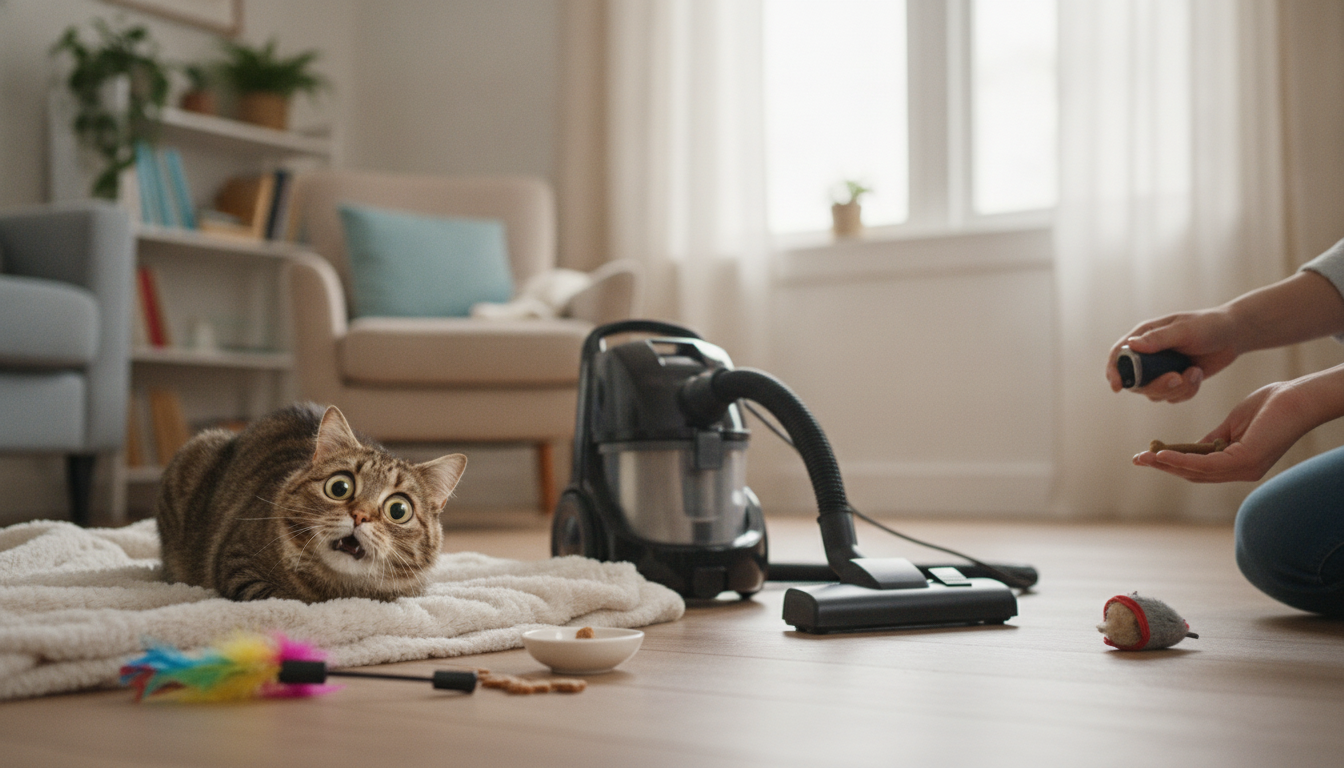
Step 1 (vacuum off): “It exists, and good things happen”
- Place the vacuum in view at a comfortable distance.
- Reward calm looks and relaxed body language (soft eyes, loose posture).
- Keep it easy: if your pet startles, you’re too close.
Step 2 (movement without power): “It moves, and I still feel safe”
- Roll the vacuum a few inches, then stop and reward.
- Repeat in short sets; aim for sessions under 3–5 minutes.
- End while your pet is still comfortable, not after they panic.
Step 3 (sound at a distance): “That noise predicts treats”
- Turn it on briefly in another room or far away.
- Reward continuously while it runs, then stop before fear spikes.
- If your pet stops eating, the sound is too intense—create more distance or shorten the burst.
Step 4 (gradual approach): “Closer over days, not minutes”
Step 5 (real-life practice): “Cleaning can happen without drama”
Many short sessions beat occasional long sessions. If you want a structured routine you can repeat daily without guessing, Helping Pets Handle Vacuum Stress is a practical option designed to support calmer cleaning sessions.
Make Cleaning Days Easier with Comfort Cues and Enrichment
For additional fear-reduction guidance and humane handling basics, the RSPCA’s tips for fearful dogs can be a helpful reference (many principles also apply to cats, with species-appropriate rewards and spacing).
Common Mistakes That Slow Progress
When to Get Professional Help
A Practical Option for Building a Calmer Vacuum Routine
- A dedicated guide can help structure daily steps, reduce guesswork, and keep progress consistent through a repeatable plan.
- For a ready-made approach, see: Helping Pets Handle Vacuum Stress (includes a focused routine for calmer cleaning sessions).
FAQ
How long does it take for a pet to get used to a vacuum?
It can take anywhere from a few days to several weeks, depending on your pet’s sensitivity and past experiences. Progress should be based on staying under threshold with short, repeatable sessions—if fear returns, back up a step and rebuild gradually.
Should a scared pet be kept in another room while vacuuming?
Yes—separating your pet can immediately reduce stress and improve safety. Pair the separation with enrichment (like a food puzzle) so vacuum time consistently predicts calm, rewarding downtime.
What if a dog tries to attack or bite the vacuum?
Prioritize safety: stop the session, use gates or a leash to prevent contact, and avoid punishment. Restart training from a greater distance with high-value rewards, and seek professional support if there’s any biting risk.










Leave a comment