Extra Large Double-Door Wire Dog Crate with Leak-Proof Tray
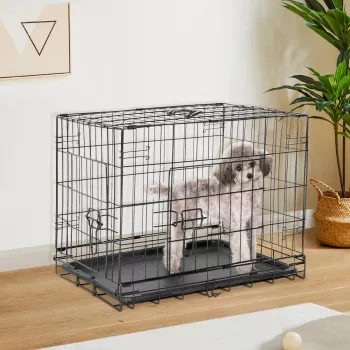
Extra Large Double Door Folding Metal Wire Dog Cage with Leak-Proof Pan Tray
A sturdy wire crate can support house-training, safe downtime, and easier travel routines. This extra large folding metal wire dog cage pairs two entry points with a leak-proof pan tray for faster cleanups, plus a fold-flat design that stores neatly between uses. If you’re building a calmer daily rhythm—meals, potty breaks, rest, and supervised play—a dependable crate becomes a practical home base rather than a “time-out” space.
What This Crate Is Designed to Do
- Provide a defined, secure space for rest, recovery, or calm separation time
- Support crate training by encouraging a consistent routine and boundaries
- Reduce mess and odors with a removable leak-proof pan tray
- Simplify access for dogs and owners with two doors for flexible placement
- Fold down for storage or transport when not in use
Many households find wire crates especially helpful because they’re easy to monitor at a glance and quick to clean after everyday mishaps. For training guidance from established organizations, review the American Kennel Club’s recommendations on crate training your dog and puppy and the Humane Society’s overview of Crate Training 101.
Key Features That Matter Day to Day
- Double-door access: choose the front or side entry depending on room layout, dog mobility, or where food/water is placed
- Folding metal wire frame: collapses for storage and can be carried more easily than rigid kennel styles
- Leak-proof pan tray: slides out for quick cleaning after accidents, muddy paws, or spilled water
- Ventilated wire design: improves airflow and visibility to help many dogs settle
- Everyday practicality: wire crates typically allow easy monitoring without opening the door
Two-door placement is one of those features that feels “optional” until it solves a real problem—like when the crate must sit beside a sofa, along a hallway wall, or in a bedroom corner. Having a second entry can make loading and unloading smoother, especially during training when calm, low-stress movement matters.
Quick Fit Check Before Buying
- Measure length: nose to base of tail, then add comfort space so the dog can stand and turn
- Measure height: floor to top of head (or ears if they stand up), then add headroom
- Confirm use case: training and downtime usually needs a snug-but-comfortable fit; longer stays may require more space and breaks
- Consider door placement: two doors help avoid awkward angles when the crate must sit against a wall or furniture
- Plan for a mat or bed: ensure there is room for the dog to lie comfortably without blocking the door swing
At-a-Glance Buying Checklist
| Decision Point | What to Look For | Why It Helps |
|---|---|---|
| Dog size and growth | Adult measurements or expected adult size for puppies | Prevents needing to replace the crate too soon |
| Entry convenience | Two-door layout and latch placement | Easier loading, cleaning, and room placement |
| Cleaning routine | Removable leak-proof tray | Faster cleanup after accidents and less lingering odor |
| Home placement | Space for the crate footprint plus door swing | Avoids cramped access that frustrates training |
| Comfort add-ons | Room for a crate pad and water solution if needed | Helps the crate feel like a calm rest space |
Setup Tips for a Smooth Start
- Choose a quiet-but-social spot: many dogs settle best where people pass by, not in a high-traffic pinch point
- Start with short sessions: pair the crate with calm rewards, chew items, and consistent timing
- Keep the first week predictable: meals, potty breaks, and crate breaks on a consistent rhythm
- Check stability: ensure the crate sits flat on the floor and doors close cleanly without rubbing
- Use the second door strategically: place the crate so one door faces the easiest entry path for the dog
For dogs new to crating, the early goal is comfort and clarity. Open-door exploration, brief closed-door moments, and prompt potty breaks can prevent the crate from becoming emotionally “heavy.” For broad dog care fundamentals that support a stable routine, the ASPCA’s general dog care guidance is a useful reference.
Cleaning and Odor Control Made Easier
- Remove the pan tray promptly after accidents to prevent residue from drying and sticking
- Wash with mild soap and warm water; rinse and dry fully before reinserting
- Use pet-safe enzymatic cleaner on the tray and nearby floor if accidents happen during training
- Spot-clean wire panels as needed, especially around door thresholds where paws track dirt
- Keep a thin washable mat or crate pad on hand for quick swaps during training phases
A leak-proof tray is a small detail that saves time weekly (sometimes daily) during puppy phases, rainy seasons, or post-park zoomies. A quick slide-out tray also helps keep odors from settling into the surrounding area, which can make the entire space feel fresher.
Safety and Comfort Checks
When an Extra Large Wire Crate Is a Good Match
Product Picks Available Now
- Extra Large Double Door Folding Metal Wire Dog Cage with Leak-Proof Pan Tray
- Compact Portable Power Bank
FAQ
How long can a dog stay in a crate?
Keep crate time age- and temperament-appropriate, with regular potty breaks, exercise, and training built into the day. A crate is best used as a safe management tool and rest space, not a long-term substitute for supervision or activity.
How do you clean a leak-proof pan tray?
Slide the tray out, wash it with mild soap and warm water, rinse thoroughly, and dry completely before reinserting. If there was an accident, a pet-safe enzymatic cleaner can help reduce lingering odor after the initial wash.
Is a double-door crate better than a single-door crate?
Two doors can make placement in your home much easier, especially near walls or furniture. It also helps with cleaning access and can create smoother, less awkward entry and exit during training.









Leave a comment