Pole Saw vs Battery Tree Trimmer: Choose the Best Tool
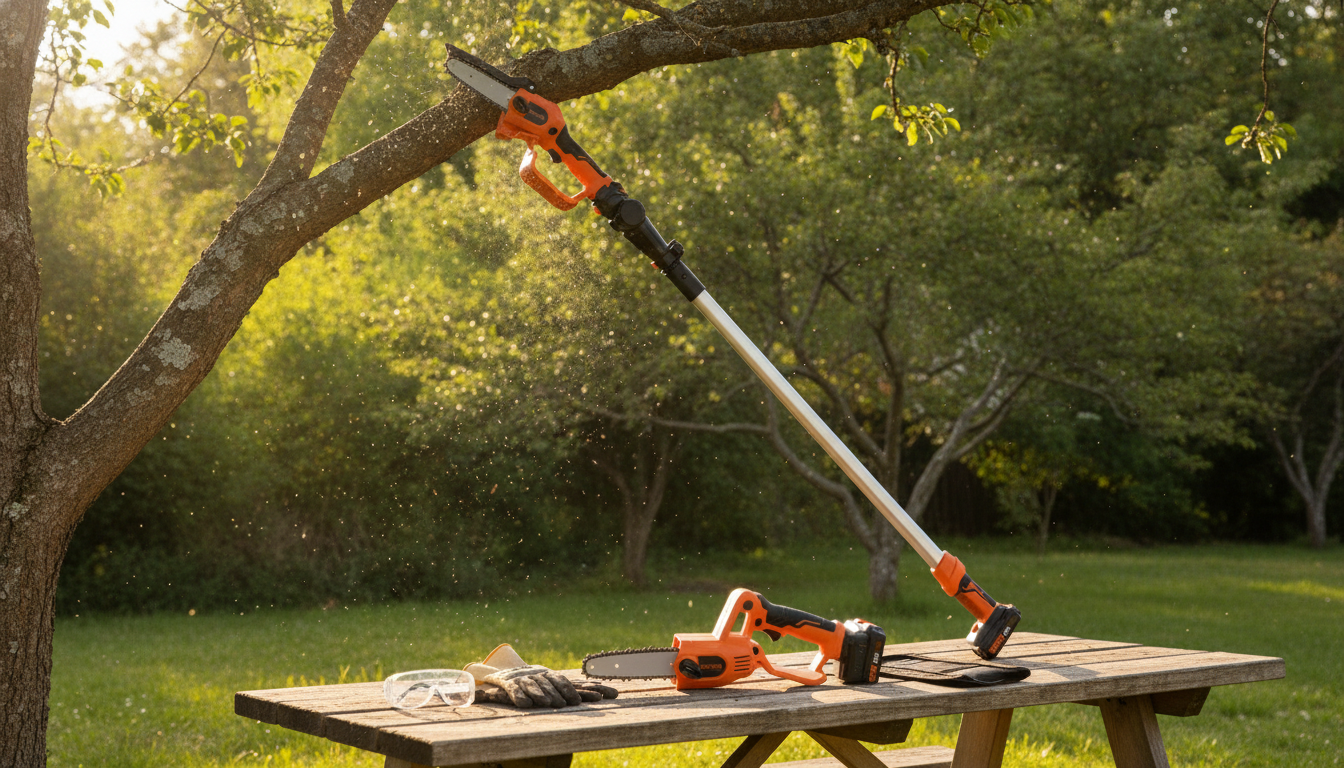
Cordless Pole Saw Chainsaw vs Battery Powered Tree Trimmer: Picking the Right Tool for Pruning and Limbing
Battery-powered cutting tools have made routine yard work quieter, lighter, and easier to start. The best choice depends on what gets cut most often—thin green growth, woody branches overhead, or occasional limbing and storm cleanup. Below is a practical breakdown of how a cordless pole saw chainsaw compares to a battery powered tree trimmer (often pruner/shear style), plus what really changes performance once you’re outside cutting real wood.
At-a-glance differences
- Pole saw chainsaw: best for higher branches and thicker wood where a chain can bite efficiently.
- Battery powered tree trimmer (pruner/shear style): best for shaping, light pruning, and smaller diameter cuts with less mess and lower kickback risk.
- A 2-in-1 design can cover both overhead reach and closer-in cutting without buying two separate tools.
Quick comparison: pole saw chainsaw vs battery tree trimmer
| Feature | Cordless pole saw chainsaw | Battery powered tree trimmer |
|---|---|---|
| Best use | Limbing, storm cleanup, overhead branches | Shaping, light pruning, small growth |
| Typical cut capability | Medium branches; depends on bar length and chain condition | Small branches/twigs; depends on blade opening |
| Reach | Extended via pole | Usually hand-held (some have extension options) |
| Cut speed in hardwood | Generally faster | Slower; may bind on thicker wood |
| Control and precision | Good, but heavier at full extension | Very precise for selective pruning |
| Mess and cleanup | More sawdust; larger pieces | Cleaner cuts; smaller debris |
| Safety considerations | Kickback risk; falling limb risk; overhead fatigue | Lower kickback; still requires eye/hand protection |
When a cordless pole saw chainsaw makes the most sense
- Overhead branches: reaching from the ground reduces ladder time, especially for routine limbing along driveways, fences, and rooflines.
- Woody limbs: chains cut efficiently through denser branches when sharp and properly tensioned, which matters when you’re working through older growth.
- Yard cleanup after wind: quick removal of hanging or downed limbs (within the tool’s capacity) helps restore access and reduces trip hazards.
- Properties with frequent canopy maintenance: repeated trimming sessions benefit from the reach advantage, even if each cut is only a few seconds.
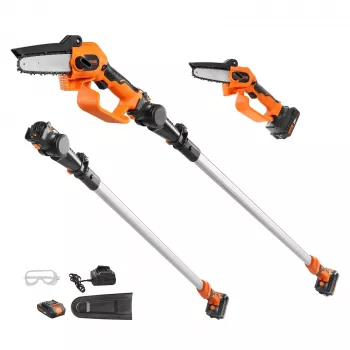
If you often look up and see what needs to come down, a pole saw-style cutter tends to be the more direct solution. For mixed jobs—overhead cuts plus closer-in branch removal—a convertible tool can simplify the whole routine: 2-in-1 Cordless Pole Saw & Mini Chainsaw – 20V Battery Powered Tree Trimmer.
When a battery powered tree trimmer is the better fit
- Shrub shaping and ornamental pruning: more control for selective, close-in cuts where you want a clean look rather than fast removal.
- Small-diameter work: fast snips on green growth without setting up an extension pole or managing a long cutting head.
- Tighter spaces: easier to maneuver around fences, raised beds, rock borders, and dense hedges.
- Lower-fatigue sessions: typically lighter and less front-heavy than a pole tool at full reach, making it easier to keep cuts neat.
For anyone who primarily “styles” plants—removing crossing twigs, cleaning up soft shoots, or tidying seasonal growth—a trimmer/pruner feels more like a precision hand tool that happens to be powered.
Key factors that change real-world performance
Good pruning technique matters just as much as tool choice. For clear, tree-friendly guidance on where to cut and how much to remove, review the International Society of Arboriculture’s Tree Pruning Basics.
Battery, runtime, and charging expectations
It also helps to keep basic hand tools nearby for quick adjustments and minor fixes (tightening hardware, checking fasteners, or handling non-powered tasks). A compact kit like the 96 Piece Household Tool Kit is handy to stash in the garage or shed.
Safety and handling essentials (especially overhead)
For additional safety references, consult OSHA’s chainsaw safety materials and the CDC/NIOSH guidance on preventing chain saw injuries during tree trimming or removal.
Maintenance that keeps cutting fast and clean
A practical option for mixed yard work: 2-in-1 pole saw and mini chainsaw
If your yard work swings between “reach it and remove it” and “cut it up on the ground,” a dual-purpose option like the 2-in-1 Cordless Pole Saw & Mini Chainsaw – 20V Battery Powered Tree Trimmer can cover more of the calendar without feeling like overkill.
FAQ
Can a battery pole saw cut thick branches safely?
Yes, as long as you cut within the tool’s rated capacity and account for bar length, chain sharpness, wood type, and your ability to control the head at full reach. Plan the drop zone, keep a stable stance, and avoid awkward overhead positions where you can’t react if the limb shifts.
Is a tree trimmer better than a mini chainsaw for pruning?
A tree trimmer/pruner is better for small, precise cuts and shaping, while a mini chainsaw is typically faster on thicker woody branches. Choose based on your usual branch size and whether you need overhead reach or mostly close-in detailing.
How often should the chain be sharpened on a cordless pole saw?
Sharpen whenever cutting slows, the saw produces fine dust instead of chips, or it starts pulling to one side. Frequency varies with wood type and accidental dirt contact, and it’s smart to check tension and keep the cutting area clean so a sharp chain stays sharp longer.









Leave a comment